
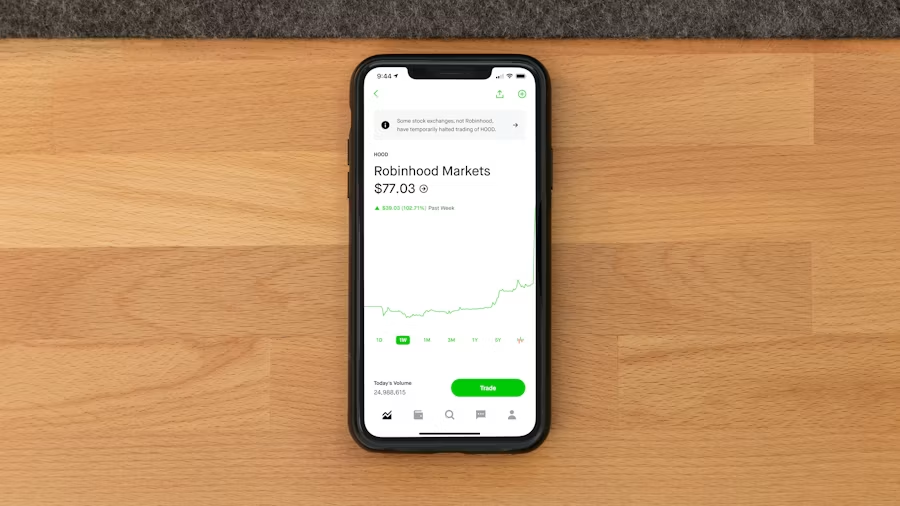
Quick Verdict
Choose Acorns if: you want investing to happen automatically, you struggle to save before spending, or you’re starting with under $500.
Choose Robinhood if: you want to pick your own stocks or ETFs, you’re comfortable making decisions, or you want to invest with zero fees.
Both are legitimate apps. They serve completely different types of investors.
Robinhood vs Acorns is one of the most searched investing comparisons among 18–25 year olds. That makes sense — both apps are built for beginners, both let you start with small amounts, and both get mentioned constantly in personal finance communities online.
But they are fundamentally different products. Picking the wrong one based on a friend’s recommendation can cost you real money in fees, or worse, leave you making investment decisions you aren’t ready to make.
This guide breaks down exactly what each app does, what it costs, and which one will actually work for your situation. If you haven’t built up savings to invest yet, read how to save your first $1,000 first — you’ll want at least a $1,000 emergency fund before putting money in the market.
What’s in this guide:
- The core difference between Robinhood and Acorns
- Full side-by-side comparison table
- Acorns — complete review with fees breakdown
- Robinhood — complete review with fees breakdown
- Real cost comparison over 5 years
- Which app is right for your situation
- Alternatives worth knowing
- FAQs
The Core Difference Nobody Explains Clearly
Most comparison articles list features side by side and leave you more confused than before. Here’s the actual difference in one sentence:
Acorns invests for you automatically. Robinhood lets you invest yourself.
Acorns is a robo-adviser. You link your debit card, it rounds up your purchases to the nearest dollar, and invests the spare change into a diversified ETF portfolio. You never pick a stock. You never decide anything. It just happens in the background.
Robinhood is a brokerage. You deposit money, then choose what to buy — stocks, ETFs, options, crypto. Nothing happens automatically. Every decision is yours.
Neither is better in an absolute sense. The right choice depends entirely on what kind of investor you are right now.
Robinhood vs Acorns: Full Comparison Table
| Feature | Acorns | Robinhood |
| App type | Robo-adviser (automated) | Self-directed brokerage |
| Monthly cost | $3/month (Personal) or $5/month (Premium) | $0 — free to trade |
| Minimum to start | $0 (spare change investing) | $1 (fractional shares) |
| You pick investments | No — Acorns picks for you | Yes — full control |
| Investment types | 5 pre-built ETF portfolios | Stocks, ETFs, options, crypto, gold |
| Round-up feature | Yes — core feature | No |
| Automatic investing | Yes — recurring + round-ups | No — manual only |
| Roth IRA available | Yes (Personal plan) | Yes — free with 1% match |
| SIPC protection | Yes — up to $500,000 | Yes — up to $500,000 |
| Best for | Passive, hands-off investors | Active, hands-on investors |
Acorns — Full Review
How Acorns Works
You link your everyday debit or credit card to Acorns. Every time you make a purchase, Acorns rounds up to the nearest dollar and invests the difference. Buy a coffee for $3.60, and $0.40 goes into your portfolio. Across 30+ transactions a week, this adds up to $30–$60 invested per month without any conscious effort.
You also set up recurring daily, weekly, or monthly deposits. The round-ups get you started — the recurring deposits build real wealth over time.
Acorns invests your money into one of five diversified ETF portfolios ranging from Conservative to Aggressive. You answer a few questions about your goals and risk tolerance, and Acorns assigns a portfolio built from iShares and Vanguard ETFs — two of the most trusted names in low-cost index investing.
What Acorns Costs — and Why It Matters
The $3/month fee is the most important thing to understand about Acorns. On a small balance, this fee is proportionally very expensive.
| Plan | Monthly | Annual | What’s included |
| Personal | $3 | $36/year | Invest + checking account + IRA |
| Premium | $5 | $60/year | Personal + kids investing + live Q&A |
Here’s the math that matters: if your Acorns balance is $500, you’re paying $36 in fees per year — that’s a 7.2% annual fee. The index funds inside your Acorns portfolio charge about 0.06% per year. You’re paying Acorns 120x more than the underlying funds actually cost.
The fee becomes reasonable once your balance hits $2,000+, where $36/year drops to under 2%. Below $1,000, the fee significantly drags on your returns.
Acorns Pros and Cons
| Pros | Cons |
| Fully automated — zero ongoing decisions | $3/month fee is expensive on balances under $1,500 |
| Round-up feature makes saving effortless | No control over individual investments |
| Includes checking account and debit card | Limited to 5 portfolio options only |
| Found Money: earn cashback at partner brands that goes directly into your portfolio | IRA access requires paying the Personal plan fee |
| Built for people who won’t invest without automation | Not designed for growth-focused or stock-picking investors |
See current pricing at acorns.com/pricing.
Robinhood — Full Review
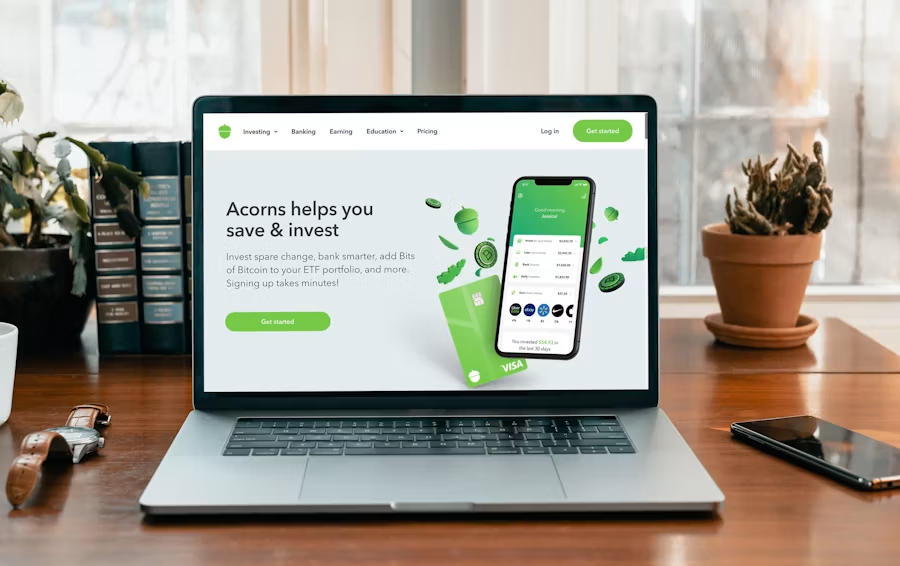
How Robinhood Works
Robinhood is a brokerage. You deposit money — even $1 — and then decide what to buy. Stocks, ETFs, options, crypto, gold. Nothing happens automatically. You are in complete control.
Fractional shares changed who Robinhood works for. You can now buy $5 of Apple stock even though one full share costs over $200. This makes Robinhood genuinely accessible to beginners with small amounts, not just experienced investors with large portfolios.
Robinhood also launched a Roth IRA with a 1% contribution match. If you put in $1,000, Robinhood adds $10. That’s not transformative — but it’s a free Roth IRA with no annual fee, which is genuinely useful for a 22-year-old starting to think about retirement.
What Robinhood Costs
Standard Robinhood: $0. No monthly fee. No commission on trades. Robinhood makes money through payment for order flow and through Robinhood Gold, their premium subscription — neither of which affects the standard user.
| Account type | Monthly cost | What you get |
| Robinhood Standard | $0 | Stocks, ETFs, crypto, options, fractional shares, Roth IRA with 1% match |
| Robinhood Gold | $5/month | Margin investing, 5% APY on uninvested cash, Level II market data, research reports |
Robinhood Pros and Cons
| Pros | Cons |
| Completely free for the standard account | No automation — requires discipline to invest consistently |
| Widest range of investments (stocks, ETFs, crypto, options) | Easy to make poor choices without guidance |
| Fractional shares starting from $1 | Options and crypto add significant risk for inexperienced investors |
| Free Roth IRA with 1% contribution match | Past outages during high-traffic trading days have frustrated users |
| Clean, intuitive app interface | Payment for order flow model is legal but a legitimate concern |
The Real Cost Over 5 Years: Fees vs. Growth
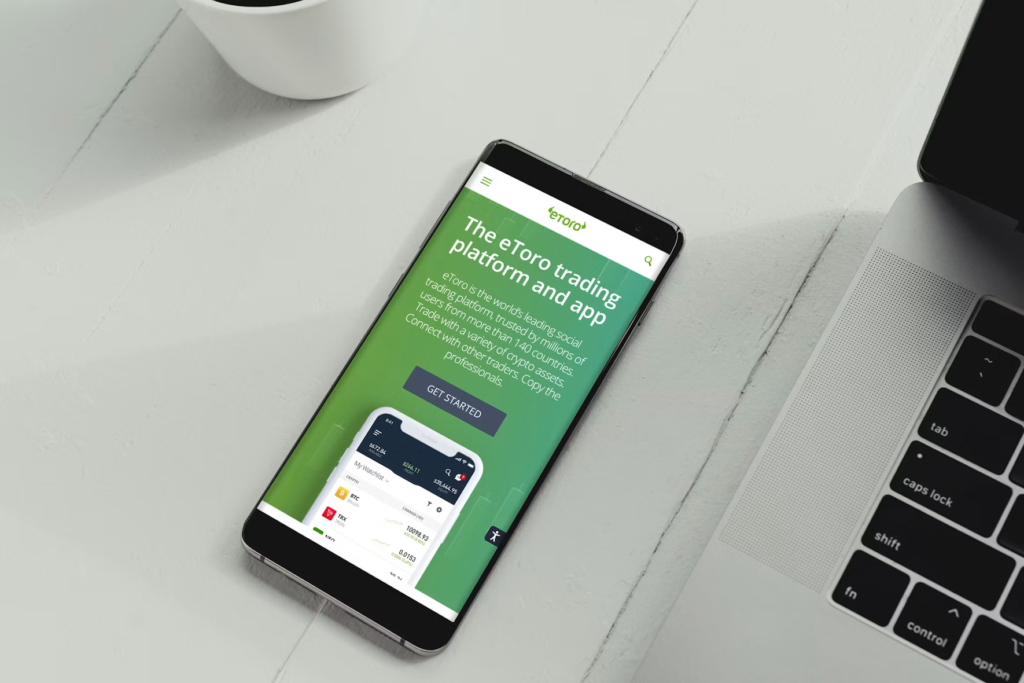
Let’s make this concrete. Assume you invest $50 per month for 5 years at a 7% average annual return — close to the stock market’s historical average. Here’s how the fee difference plays out:
| Acorns Personal | Robinhood (index ETFs) | Difference | |
| Total invested | $3,000 | $3,000 | — |
| Fees paid to app | $180 (Acorns fee) | ~$2 (ETF expense only) | ~$178 more |
| Portfolio value at 7% | ~$3,380 | ~$3,558 | +$178 for Robinhood |
$178 over 5 years is not devastating. But over 20 years, the compounding effect of that annual $36 fee difference grows to $2,000–$4,000 in lost returns depending on your balance growth.
The Acorns fee only makes sense if it’s the reason you invest at all. If the automation is what gets you to invest $50/month when you otherwise wouldn’t, then $36/year is a bargain. If you’d invest consistently anyway, Robinhood is the better financial choice.
Which App Is Right for You?
Choose Acorns If…
- You’ve tried to save before and kept spending the money before investing it
- You want to invest but feel overwhelmed by choosing stocks or ETFs
- You’re starting with under $500 and want to build the habit first
- You want investing, checking, and retirement all in one place
- You won’t miss $3/month and genuinely value the full automation
Choose Robinhood If…
- You’re comfortable making your own investment decisions — or committed to learning
- You plan to buy simple index ETFs like VTI or VOO and hold them long-term
- You have over $1,000 to invest and don’t want $36/year going to an app
- You want a free Roth IRA with a 1% contribution match
- You want the option to occasionally buy individual stocks alongside ETFs
What About Using Both?
Plenty of people use both — and it makes strategic sense at a certain point. Start with Acorns to build the investing habit and grow your first $500–$1,000. Then open a Robinhood Roth IRA for tax-advantaged retirement investing at zero cost. You can keep Acorns running for its automation while building more intentional investing habits on Robinhood in parallel.
It’s not the leanest setup, but it works for people who need the Acorns safety net while developing the discipline for self-directed investing over time.
Two Alternatives Worth Knowing
- Betterment — Another robo-adviser like Acorns, but charges 0.25% annually instead of a flat $3/month. On balances under $1,440/year invested, Acorns is cheaper. Above that, Betterment becomes the better value. It also has superior tax-loss harvesting features for investors in higher tax brackets.
- Stash — Similar to Robinhood but with more guidance. Offers curated investment themes that bundle related stocks and ETFs (“Clean and Green”, “American Innovators”). Costs $3/month. A good middle ground for people who want some direction without full automation.
Are Robinhood and Acorns Safe?
Both apps are registered with the SEC and both are members of SIPC (Securities Investor Protection Corporation). SIPC protects your brokerage account up to $500,000 if the brokerage firm fails — not if your investments lose value. That’s the same protection you’d have at any major brokerage like Fidelity or Vanguard.
Your money is as protected as it would be anywhere. Acorns has operated since 2012, Robinhood since 2013, and both have tens of millions of users and significant regulatory oversight.
The more practical risk with Robinhood is behavioral: its easy interface has led some beginners into options trading and margin debt, both of which can wipe out an account quickly. FINRA — Robinhood investor notes has noted concerns about Robinhood’s design choices around these features. The solution for beginners is simple: stick to stocks and ETFs. Ignore options and margin entirely until you have years of experience and a clear understanding of what you’re doing.
For a broader overview of what the SEC says about robo-advisers like Acorns, the SEC — robo-adviser investor bulletin is worth reading before you commit.
FAQs
Can I lose all my money on Robinhood or Acorns?
Yes, in theory — all investments can lose value. But losing everything requires every company in your portfolio to go bankrupt simultaneously, which has never happened in a diversified index ETF. If you buy one individual stock and that company fails, you lose that money. This is why beginners should stick to broad ETFs like VTI or SPY on Robinhood — they hold hundreds of companies, making total loss essentially impossible. Acorns only offers diversified ETF portfolios by design, so single-stock risk doesn’t apply there.
Is Acorns worth the $3 per month fee?
It depends entirely on your balance. On a $300 balance, $36/year is a 12% fee — not worth it. On a $3,000 balance, it’s 1.2% — borderline. On a $5,000+ balance, the automation value starts to justify the cost. The real question isn’t whether $3/month is objectively worth it. It’s whether the automation is the difference between you investing and you not investing. If yes, pay the $3. If not, use Robinhood for free.
How much money do I need to start investing on either app?
Robinhood allows fractional share purchases from $1. Acorns invests your spare change, so you can technically start with $0 and let round-ups build your balance. In practice, you’ll want to add a recurring $25–$50/month deposit on top of round-ups to see meaningful growth. The round-ups average $15–$30/month for most users — a good start but not enough on their own for serious long-term wealth building.
Does Robinhood or Acorns report to the IRS?
Yes, both do. Robinhood sends a 1099 form at year end covering all your trading activity. You owe capital gains tax when you sell an investment at a profit — lower rates if you held for over a year (long-term), standard income rates if under a year (short-term). Acorns reports the same way for dividends and any realized gains. The simplest tax strategy for beginners: buy index ETFs and hold them long-term. Fewer sales means fewer taxable events and lower tax complexity.
Can I transfer my Acorns balance to Robinhood later?
Yes. This is done via ACATS (Automated Customer Account Transfer Service), which both platforms support. The process takes 5–7 business days. There may be a small outgoing transfer fee from Acorns — check current details at acorns.com/pricing. Starting with Acorns to build the habit and transferring to Robinhood once your balance grows is a completely reasonable long-term strategy.
The Bottom Line
Robinhood and Acorns are both good apps for beginners — they’re just built for opposite ends of the spectrum. Acorns is the better starting point if discipline is your problem. Robinhood is the better long-term tool if you’ll actually use it consistently.
The most common path: start with Acorns to build the investing habit and get your first $500 working. Then open a Robinhood Roth IRA as your balance and confidence grow. There’s no rule that says you can only use one.
The most important thing is simply starting. Even $25/month in an index ETF, combined with how to save your first $1,000 and best credit cards for no credit history, puts you ahead of most people your age financially. The time to start is always right now.
Sources
1. Acorns — official pricing and plan details
2. Robinhood — account features and product overview
3. FINRA — investor information on Robinhood
4. SEC — robo-adviser investor bulletin




Pingback: Budgeting for Living Alone: The Complete Guide With Real Numbers (2026) | MoneyUnder25