Quick Answer: The 8 Steps to Raise Your Credit Score
1. Pay every bill on time — payment history is 35% of your score
2. Lower your credit utilization below 30% (ideally below 10%)
3. Ask for a credit limit increase on existing cards
4. Become an authorized user on someone else’s account
5. Dispute any errors on your credit report
6. Avoid applying for new credit unless necessary
7. Keep old accounts open even if you don’t use them
8. Add a credit-builder loan to diversify your credit mix
Most people see results within 30–90 days by focusing on steps 1–3 first.
Your credit score isn’t fixed. It moves up and down every month based on what you do with your credit accounts. Understanding that is the first step — because it means you have real control over where it ends up.
The frustrating part is that most advice is either too vague (‘pay your bills on time!’) or too slow (‘wait 7 years for that error to fall off’). There are actually specific, concrete moves that move your score faster than others, and some that people think help but don’t.
This guide covers the 8 most effective steps — ordered by speed of impact — with real timelines for each. If you’re starting from scratch with no credit history at all, read our guide on building credit from zero first. This article is for people who have an existing score and want to improve it.
What’s covered:
- How credit scores work (brief)
- The 8 steps to increase your score — fastest impact first
- Realistic timelines: how much can your score improve and when?
- Common mistakes that keep your score stuck
- How to check your credit score for free
- FAQs
How Your Credit Score Is Calculated
Before you can improve your score, you need to know what’s actually being measured. Your FICO score — the most widely used model — is calculated from five factors. According to myFICO:
| Factor | Weight | What it means |
| Payment history | 35% | Whether you pay bills on time |
| Credit utilization | 30% | How much of your available credit you’re using |
| Length of credit history | 15% | How long your accounts have been open |
| Credit mix | 10% | Having different types of accounts (cards, loans) |
| New credit inquiries | 10% | How recently you applied for new credit |
Payment history and credit utilization together make up 65% of your score. These are also the two factors you can change fastest. That’s why steps 1 and 2 below have the biggest and quickest impact.
The 8 Steps to Increase Your Credit Score — Fastest Impact First

Step 1: Pay Every Bill On Time — Even One Day Late Hurts
Payment history is 35% of your FICO score. A single payment that’s 30 or more days late can drop your score by 50–100 points and stays on your report for seven years. The impact is especially large if you have a thin credit file with few accounts.
The fix is simple and immediate: set up autopay for the minimum payment on every account right now. You don’t need to pay the full balance through autopay — just the minimum, which keeps you current. Then pay the full balance manually when you get the statement.
If you already have a late payment on your record, there’s no fast fix — but you can write a goodwill letter to the creditor asking them to remove it as a one-time courtesy if your history before and after was clean. It works more often than people expect.
Timeline: Preventing new late payments improves your score gradually each month. A late payment already on your record takes time to fade — but its impact diminishes after 2 years, and it falls off completely after 7.
Step 2: Lower Your Credit Utilization — This Moves Your Score Fastest
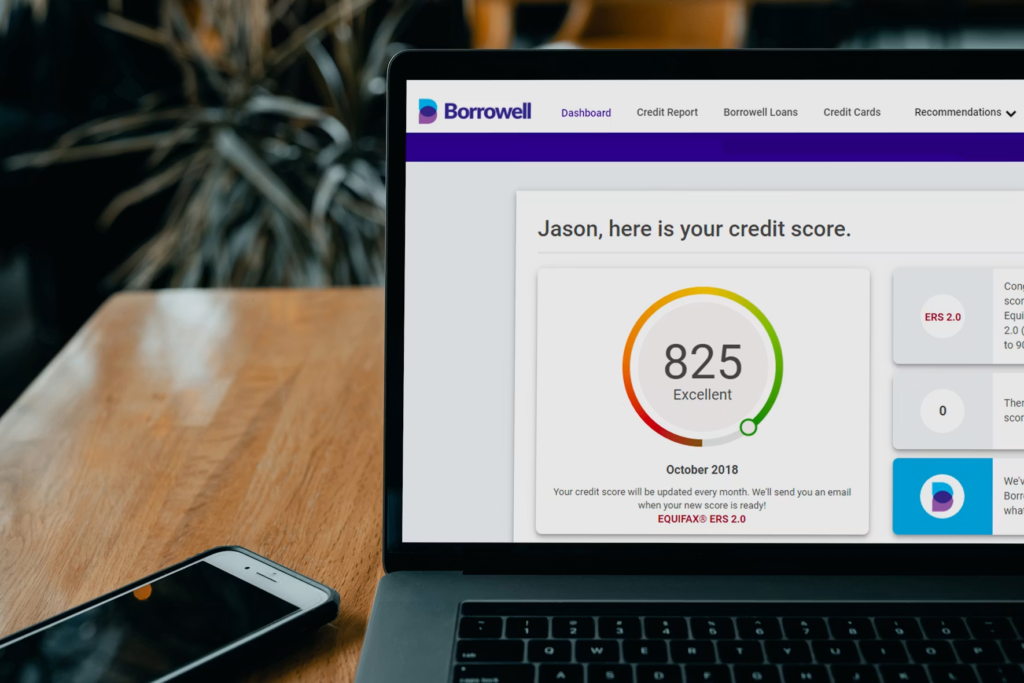
Credit utilization is the percentage of your available credit you’re currently using. It’s the fastest-moving factor in your score — changes can be reflected within one billing cycle.
The target: under 30% on any single card, and under 10% overall for the highest possible scores. According to Experian, people with scores above 750 typically use less than 7% of their available credit.
Here’s how the math works: if your card has a $1,000 limit and you have $700 on it, your utilization is 70%. That actively hurts your score. Pay it down to $300 and your utilization drops to 30%. Pay it to $100 and you’re at 10%.
Three ways to lower utilization without waiting for payoff:
- Pay down existing balances. The most straightforward path — any reduction in your balance immediately lowers utilization.
- Ask for a credit limit increase. If your card issuer raises your limit from $1,000 to $1,500 and your balance stays the same, your utilization drops automatically. Many issuers grant this with a soft inquiry (no score impact) for accounts in good standing.
- Spread spending across multiple cards. Having $300 spread across three cards with $1,000 limits each gives you 10% utilization rather than 30% on one card.
Timeline: Pay down your balances before your statement closing date (not the due date). The closing date is when the issuer reports your balance to the credit bureaus. Lower balance on the closing date = lower utilization reported = higher score within 30 days.
Step 3: Request a Credit Limit Increase

This is one of the easiest and most overlooked moves. Calling your card issuer and asking for a higher credit limit takes five minutes. If they approve it without a hard inquiry (many do for good-standing accounts), your utilization drops immediately with no other action required.
When to ask: after 6–12 months of on-time payments on the card. Most issuers have a standard review period. Capital One and Discover both allow online requests with soft pulls only.
Important: only request a limit increase if you won’t be tempted to spend more because of it. The goal is lower utilization, not more spending room. A limit increase that leads to more spending defeats the purpose entirely.
Step 4: Become an Authorized User on a Trusted Person’s Account
If someone you trust has a credit card with a long history of on-time payments and low utilization, being added as an authorized user on that account can boost your score significantly — sometimes within 30 days.
The card’s entire positive history gets added to your credit report. According to the CFPB, this is one of the legitimate methods for building or improving credit, particularly for people with limited credit history.
You don’t need to use the card. You don’t even need to have the physical card. The account just needs to appear on your report.
What to look for in a card worth being added to:
- Account has been open for at least 2 years
- Zero or very few missed payments
- Utilization consistently under 30%
- Issuer reports authorized users to the credit bureaus (most major issuers do)
Step 5: Check Your Credit Report for Errors and Dispute Them
A Federal Trade Commission study found that 1 in 5 Americans has at least one error on their credit report. Some of those errors lower your score unfairly. You’re entitled to one free report from each bureau per year at AnnualCreditReport.com.
What to look for:
- Accounts that don’t belong to you (potential fraud or data mix-up)
- Late payments that you actually paid on time
- Accounts listed as open that you closed years ago
- Incorrect balances or credit limits
- Negative items that should have aged off (7 years for most negative items, 10 years for bankruptcy)
If you find an error, file a dispute directly with the bureau reporting it — Experian, TransUnion, or Equifax. They’re required to investigate within 30 days. If the dispute is upheld, the item is removed and your score adjusts accordingly.
Timeline: Dispute resolution takes 30–45 days. If an error is removed, score improvement is reflected in the following billing cycle.
Step 6: Stop Applying for New Credit Accounts

Every time you apply for a new credit card or loan, the lender does a hard inquiry on your report. A single hard inquiry drops your score 5–10 points and stays on your report for two years (though the impact fades after 12 months).
If you’ve been applying for multiple cards recently — maybe after a rejection or two — those inquiries add up. Each one is a small signal that you might be in financial stress or overextending yourself.
The rule: if you’re actively working to improve your score, don’t apply for anything new for 6–12 months. Let your existing accounts build history and let recent inquiries age.
The exception: if you’re rate-shopping for a mortgage or auto loan, multiple inquiries within a 14–45 day window are typically treated as a single inquiry by FICO scoring models.
Step 7: Keep Old Accounts Open

Credit history length is 15% of your score. The calculation includes both the age of your oldest account and the average age of all accounts. Closing an old account shortens your history and can raise your utilization at the same time.
A common mistake: someone gets a better credit card with more rewards and closes their first card. This removes years of positive history from their report, lowers average account age, and removes that card’s credit limit from their utilization calculation.
Instead: keep the old card open. Use it for one small purchase every few months to prevent the issuer from closing it for inactivity. Pay it off. Leave it alone. It’s quietly helping your score every month by existing.
Step 8: Add a Credit-Builder Loan to Diversify Your Mix

Credit mix is 10% of your score — a smaller factor, but meaningful once the bigger items are handled. Having only credit cards without any installment loans (car loan, student loan, personal loan) is a common pattern for young adults.
A credit-builder loan is specifically designed to add installment loan history without taking on real debt. You make fixed monthly payments into a savings account, receive the money at the end, and get 12–24 months of on-time payment history on your report.
Self (formerly Self Lender) is the most commonly used service. Plans start at $25–$48/month. It’s not a great investment return, but as a credit-building tool it’s effective. We covered this in detail in our guide to building credit from zero.
Only add a credit-builder loan if steps 1–5 are already in place. Adding new credit when your fundamentals aren’t solid is counterproductive.
Realistic Timelines: How Much Can Your Score Actually Improve?
Everyone wants to know: how fast? Here are realistic expectations based on the specific situation you’re starting from.
| Starting situation | Steps that help most | Realistic improvement | Timeline |
| High utilization (60%+) | Steps 2 and 3 | 50–100 point improvement | 1–2 billing cycles |
| Recent missed payment | Steps 1 and 5 | Gradual; 20–40 pts as it ages | 12–24 months |
| Errors on report | Step 5 | Varies — depends on error | 30–45 days |
| Thin file, few accounts | Steps 4 and 8 | 30–60 point improvement | 1–3 months |
| Good habits, want 750+ | Steps 2, 6, 7 | Gradual climb, 10–20 pts/mo | 6–12 months |
The most important thing this table shows: high utilization is the fastest problem to fix. If your credit cards are maxed or near-maxed, paying them down is the single most impactful move you can make — and you’ll see results within one billing cycle.
Common Mistakes That Keep Your Score Stuck
- Paying the minimum and wondering why your score isn’t improving. Minimum payments keep you current (good for payment history) but don’t reduce your utilization significantly. Carrying a $900 balance on a $1,000 card while making $25 minimum payments means your utilization stays near 90%.
- Closing cards to ‘simplify’ finances. This shortens your credit history and removes available credit from your utilization calculation. Both hurt your score. Keep cards open and use them occasionally instead.
- Checking your score too often and panicking about small fluctuations. Scores move up and down by 5–15 points naturally as balances are reported. A 10-point drop after a balance update isn’t a problem. Trend matters, not day-to-day movement.
- Opening multiple cards at once to increase available credit. Multiple hard inquiries in a short period signals risk to lenders. The utilization benefit is real, but it’s outweighed by the inquiry impact in the short term.
- Thinking paying off a collection account removes it from your report. Paying a collection marks it as ‘paid’ but doesn’t remove it. It stays on your report for 7 years from the date of the original delinquency. Some newer scoring models (FICO 9, VantageScore 3.0+) ignore paid collections — but many lenders still use older models.
How to Check Your Credit Score and Report for Free
You don’t need to pay for credit monitoring. There are multiple legitimate free options:
| Service | What you get free | Notes |
| Credit Karma | TransUnion + Equifax scores | Updated weekly. Good for tracking trends. |
| Experian free account | Experian FICO score | Updated monthly. The actual FICO model. |
| Discover (cardholders) | FICO score on statement | Free even for Secured card holders. |
| Chase, Capital One, etc. | Score in banking app | Most major banks offer this now. |
| AnnualCreditReport.com | Full credit reports | Official. All 3 bureaus. Free once/year each. |
The score from Credit Karma uses VantageScore, which differs slightly from FICO. For the score most lenders actually use, check your Experian FICO through their free account or through your card issuer. The CFPB’s credit tools page has additional resources for monitoring your reports.
FAQs
How fast can you raise your credit score?
It depends on what’s holding your score down. The fastest improvement comes from paying down high balances — this can move your score 50–100 points within a single billing cycle (30–60 days). Errors on your report take 30–45 days to resolve through a dispute. Rebuilding after a missed payment takes longer — the impact fades over 12–24 months. Starting from a thin file with few accounts takes 3–6 months of consistent behavior to see meaningful movement.
How much can your credit score go up in one month?
In extreme cases — say you had 90% utilization and paid your balance down to 10% — you could see a 100-point jump in a single billing cycle. More realistically, most people see 10–30 points of improvement per month when actively working on their credit. A lot depends on what your score is now: moving from 580 to 620 is typically faster than moving from 720 to 760.
Does paying off debt raise your credit score?
Paying off credit card debt raises your score by lowering your utilization, which can happen quickly. Paying off an installment loan (car loan, student loan) has a more mixed effect — your utilization on that account goes to 0% (good), but your credit mix may narrow and your average account age may change. The net effect of paying off a loan is usually positive or neutral, rarely negative.
What is a good credit score for someone in their 20s?
Credit scores range from 300–850. According to Experian’s data, the average American’s credit score is around 714. For your 20s, reaching 700 is a solid milestone that qualifies you for most standard financial products. A score above 740 gets you the best rates on car loans, personal loans, and eventually mortgages. The goal isn’t perfection — it’s getting above 700 by your mid-20s and staying there. See what credit score you need to lease a car for what a 700+ score means in the real world.
Can paying rent build my credit score?
Not automatically. Rent payments don’t show up on your credit report unless you use a rent reporting service. Experian RentBureau, Rental Kharma, and RentReporters all offer to report your on-time rent payments to one or more credit bureaus for a small monthly fee. This can meaningfully boost a thin credit file. Experian Boost also offers free rent reporting to the Experian bureau specifically. Results vary — the impact depends on your current file.
The Bottom Line
Your credit score improves when you give it the right inputs consistently. Two things move it fastest: paying on time and lowering your utilization. Everything else is supporting work.
If your utilization is high, paying it down is your one job right now. If you’re making all your payments on time and utilization is low, you’re mostly waiting for time to work in your favor — older accounts, more history, a maturing credit file.
The practical goal for your 20s: hit 700 and stay above it. That score gets you approved for most things that matter — apartments, car loans, good credit card rates. For context on what that score gets you access to, see what credit score you need to lease a car and our guide to financial goals for your 20s.
Sources
1. myFICO — FICO score factors and weightings
2. Experian — how to improve your credit score
3. Consumer Financial Protection Bureau — credit scores and reports
4. AnnualCreditReport.com — free credit report access
5. TransUnion — credit score improvement guidance
Related on MoneyUnder25:
→ How to build credit from zero (no history)