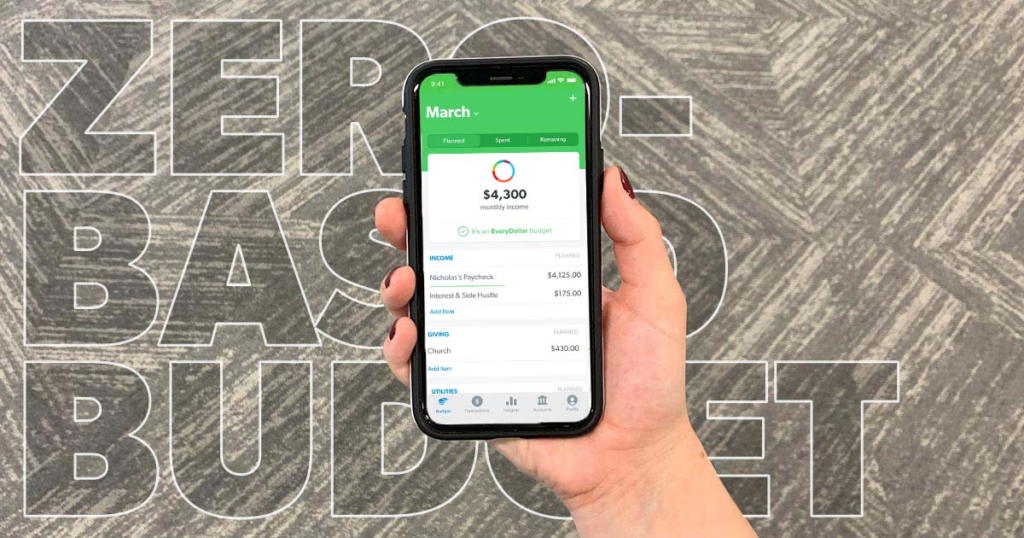
What Zero-Based Budgeting Is — In One Sentence
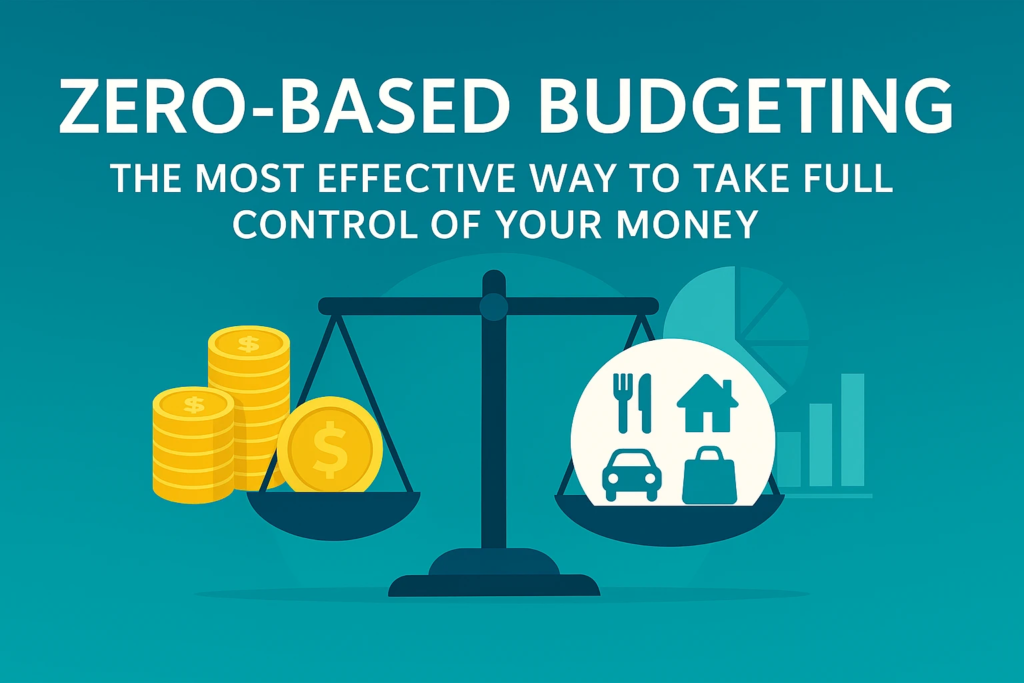
Every dollar of income gets assigned a specific job — until income minus all assigned dollars equals zero.
Zero doesn’t mean your bank account is empty — it means every dollar has a purpose.
Example: $3,000 income → $1,400 needs + $800 wants + $500 savings + $300 debt payoff = $3,000.
The result: no dollar floats around unassigned and available to be spent on impulse.
Best for: people who overspend in the “leftover money” category, or who want maximum control.
Zero-based budgeting (ZBB) is more intentional than percentage-based methods like the 50/30/20 rule. Instead of allocating percentages of income to broad categories, you assign every single dollar to a specific line item at the start of each month. When the month is over, you’ve accounted for every dollar you earned.
According to the Consumer Financial Protection Bureau, people who assign specific purposes to their income before spending it accumulate savings at a significantly higher rate than those who save ‘what’s left over.’ Zero-based budgeting takes this principle to its logical conclusion: nothing is left over because everything is already assigned.
This guide covers how to build your first zero-based budget step by step, how it compares to the 50/30/20 rule, and how to handle the months where the numbers don’t work the way you planned. If you’ve never built any budget before, how to make a budget is the starting point — come back to zero-based budgeting once you’ve been through one month of basic tracking.
Zero-Based Budgeting vs 50/30/20: Which Should You Use?
Both are effective budgeting methods — they suit different situations:
| Zero-Based Budgeting | 50/30/20 Rule | |
| Core idea | Every dollar assigned a specific job | Income split into 3 broad categories |
| Detail level | High — line item for each expense | Low — just 3 buckets |
| Setup time | 30-60 min/month | 15-20 min/month |
| Best for | People who overspend, want strict control, have specific goals | People who are generally on track and want a simple framework |
| Flexibility | Lower — requires active monthly adjustment | Higher — categories are broad |
| Irregular income | Works well with the right setup | Works — use lowest typical income as base |
| Works best when | You need to cut spending fast or hit a specific goal | You want a sustainable long-term framework |
You don’t have to choose forever. Many people use zero-based budgeting for 3-6 months to build awareness and cut overspending, then shift to the 50/30/20 rule once habits are established. ZBB is a great diagnostic tool even if it’s not your permanent system.
How to Build Your Zero-Based Budget — Step by Step
Step 1: Start With Your Monthly Take-Home Income
Use your actual take-home (after-tax) income — not gross salary. If you’re paid biweekly, your monthly income is your biweekly check × 26 ÷ 12. If you’re paid irregularly, use your lowest typical month as your base.
According to the Bureau of Labor Statistics, the median monthly take-home pay for full-time workers aged 25-34 is approximately $3,000-3,800. Use your actual number, not an average.
Step 2: List Every Expected Expense This Month
Write down every expense you expect this month — not last month’s averages, this specific month. Some months have irregular expenses (car registration, dentist appointment, birthday gift). Include them.
| Category | Type | Common examples |
| Fixed needs | Same every month | Rent, car payment, phone, internet, minimum loan payments |
| Variable needs | Changes monthly | Groceries, gas, utilities, medical copays |
| Wants | Discretionary | Dining out, entertainment, clothing, subscriptions |
| Savings goals | Assigned | Emergency fund, Roth IRA, specific savings goals |
| Debt payoff | Extra payments | Anything above minimums on credit cards or loans |
| Irregular expenses | This month only | Car registration, annual subscription renewals, gifts, medical |
Step 3: Assign Every Dollar Until You Reach Zero
Add up all your assigned expenses and savings. Subtract from income. The result should be zero.
If income − expenses > 0 (money left over): Assign the leftover to something specific — extra savings, extra debt payment, or a specific goal. Never leave dollars unassigned. Unassigned dollars become impulse spending.
If income − expenses < 0 (over budget): Something has to be cut or reduced. Start with wants — dining out, subscriptions, entertainment. Then look at whether any variable needs can be trimmed. Do not reduce savings below your target unless it’s a genuine emergency.
Step 4: Track Spending Throughout the Month
Zero-based budgeting only works if you track as you go. When you spend $45 at a restaurant, subtract it from your dining budget. When your electric bill comes in at $85 instead of $80, subtract the difference from somewhere else.
Tracking options: A simple spreadsheet works (see our free budget spreadsheet). Apps like YNAB (You Need A Budget) are designed specifically for zero-based budgeting — they track in real time and alert you when categories are running low.
Step 5: Do a Monthly Review and Reset
On the last day of each month, review what actually happened vs what you planned. This is not about judging yourself — it’s data collection. Which categories ran over? Which ran under? Where did unplanned expenses appear?
Then build next month’s budget using what you learned. Month 2 is always more accurate than Month 1 because you have real data instead of estimates.
A Complete Zero-Based Budget Example ($3,200/Month)
| Category | Amount | Notes |
| INCOME | $3,200 | Monthly take-home after tax |
| ─── FIXED NEEDS ─── | ||
| Rent | $950 | |
| Phone | $35 | Budget carrier |
| Internet | $55 | |
| Car insurance | $95 | |
| Student loan minimum | $180 | |
| ─── VARIABLE NEEDS ─── | ||
| Groceries | $280 | Home cooking target |
| Gas | $80 | |
| Utilities (electric/gas) | $90 | |
| ─── WANTS ─── | ||
| Dining out | $120 | Hard limit — tracked weekly |
| Entertainment | $60 | |
| Clothing | $50 | |
| Streaming (Netflix only) | $17 | |
| Personal care | $40 | |
| ─── SAVINGS & DEBT ─── | ||
| Emergency fund (autopay) | $300 | Transfers on payday |
| Roth IRA | $200 | |
| Extra student loan payment | $200 | Reducing principal faster |
| ─── IRREGULAR (THIS MONTH) ─── | ||
| Birthday gift (sister) | $50 | Planned |
| Car oil change | $50 | Due this month |
| TOTAL ASSIGNED | $3,202 | $2 over — take from clothing budget |
| REMAINING (target: $0) | −$2 | Adjust: clothing $48 instead of $50 ✅ |
This example shows a common first-attempt scenario: you’re $2 over. The fix is minor — reduce one category slightly. The process forces you to make that decision consciously instead of discovering it when your account is low.
Zero-Based Budgeting With Irregular Income
Freelancers, gig workers, and anyone with variable income can use zero-based budgeting — with one adjustment:
- Use your lowest typical monthly income as your base. Build your zero-based budget around that number. If you earn more in a given month, assign the extra at the time it arrives — to savings, debt payoff, or a specific goal.
- Build a buffer account first. Before starting ZBB with irregular income, accumulate 1 month of expenses in a separate account. This buffer smooths out low-income months and lets you budget consistently.
- Prioritize fixed needs first. In months where income is lower than usual, the order of priority is: fixed needs → minimum debt payments → variable needs → savings → wants. Never skip savings entirely for more than one month.
- According to the Federal Reserve, irregular-income households that use a formal budgeting system — any system — report higher financial stability than those without one, even if they earn the same average amount.
Common Zero-Based Budgeting Mistakes
| Mistake | Fix |
| Forgetting irregular expenses | Every month, ask: what’s different this month? Car registration? Dentist? Birthday? Add these before balancing to zero. |
| Making the budget too tight | Leaving no room for wants makes the budget feel punishing and unsustainable. Even a tight month needs $50-100 in wants. |
| Not tracking during the month | A zero-based budget built and then ignored is just a wish list. Update it weekly — 10 minutes on Sunday. |
| Giving up after month 1 | Month 1 will be inaccurate. Month 2 will be better. Month 3 will feel natural. ZBB has a learning curve. |
| Forgetting savings as an expense | Savings must be a line item in the budget — not whatever is left over. Assign it first, the same as rent. |
| Using gross income instead of take-home | Always budget on take-home pay. Budgeting on gross overstates what’s available by 20-30%. |
FAQs
What is zero-based budgeting?
Zero-based budgeting is a method where you assign every dollar of income to a specific purpose until income minus all assigned spending and savings equals zero. The ‘zero’ refers to what’s left unassigned — not your bank balance. According to the CFPB, intentionally assigning income before spending it is one of the most effective behaviors for building savings and reducing financial stress. ZBB forces this by design — no dollar can float unassigned into impulse spending because every dollar already has a job.
Is zero-based budgeting better than the 50/30/20 rule?
Neither is universally better — they suit different situations. The 50/30/20 rule is simpler and more flexible: three broad categories, less monthly setup. Zero-based budgeting gives more control and awareness: every line item is specific, making it harder to overspend in any category. ZBB works better for people who overspend, who have specific goals to hit fast, or who want complete visibility into their finances. The 50/30/20 rule works better for people who are generally on track and want a sustainable, low-effort framework.
How do I start zero-based budgeting?
Five steps: (1) Calculate your exact monthly take-home income. (2) List every expense expected this month — fixed needs, variable needs, wants, savings goals, and irregular costs. (3) Assign a dollar amount to each until income minus assigned amounts equals zero. (4) Track actual spending against your budget throughout the month. (5) On the last day of the month, review what happened and build next month’s budget. Use a spreadsheet or a dedicated app like YNAB. The free free budget spreadsheet can be adapted for zero-based budgeting by adding line items to each category.
What does “income minus expenses equals zero” mean?
It means every dollar of income has been assigned to a category — needs, wants, savings, or debt payoff — with nothing left over as unassigned. If you earn $3,200 and your total assigned categories add up to $3,200, you’ve reached zero. Your bank account doesn’t go to zero — the money is still there, but it’s earmarked. The $300 assigned to emergency fund transfers to savings. The $200 assigned to Roth IRA gets invested. The $120 dining budget gets spent on actual meals. Nothing drifts into impulse spending because there’s nothing left to drift.
Does zero-based budgeting work for people with irregular income?
Yes — with one adjustment. Build your budget around your lowest typical monthly income, not your average. When you earn more than that in a given month, assign the extra to savings or debt payoff at the time it arrives. Before starting ZBB with irregular income, build a 1-month expense buffer in a separate account — this lets you budget consistently even in low-income months. See save $500 a month for how to build that buffer with variable income.
The Bottom Line
Zero-based budgeting works because it eliminates the category that causes most overspending: unassigned money. Every dollar gets a job before you have the chance to spend it on something unplanned.
Month 1 will feel like effort — you’ll underestimate some expenses and over-budget others. Month 2 is more accurate. Month 3 is when the intentionality becomes automatic.
Start by building this month’s zero-based budget: income first, then fixed needs, then variable needs, then savings (treat it like a bill), then debt payoff, then wants with whatever is left. If the math doesn’t reach zero, reduce wants until it does. Use the free budget spreadsheet as a starting template. If overspending is your core problem, how to stop overspending covers the 12 specific tactics that stop the pattern once your budget is in place.
Sources
1. Consumer Financial Protection Bureau — budgeting guidance
2. Bureau of Labor Statistics — Consumer Expenditure Survey and earnings data