You spent weeks imagining exactly how you would spend your first big earnings, but when you finally open your bank app, the balance is hundreds of dollars lower than you calculated. Where did that missing money go? It is a common shock for anyone starting their career. You worked the hours, but taxes and mystery deductions took their bite before you could even blink. Learning how to manage first paycheck is the first step toward stopping that feeling of being overwhelmed by terms like 401k or Roth IRA.
If you feel more confused than celebrated, you are not alone. This guide will show you how to decode your paystub and build a bulletproof budget that actually sticks in 2026. We are going to move you from financial uncertainty to quiet confidence using a practical approach to capital oversight. You will get a clear plan for every dollar, including a guilt-free spending allowance that lets you enjoy your life today while protecting your future. Let’s turn that check into a solid foundation for your independence.
Key Takeaways
- Understand the gap between gross and net pay so you aren’t surprised by tax deductions on your first day.
- Discover how to manage first paycheck using a “pay yourself first” strategy to build a $1,000 emergency fund.
- Find the right balance between the 50/30/20 rule and zero-based budgeting for your specific lifestyle.
- Beat the urge to splurge with the 24-hour rule and keep your spending guilt-free.
- Start your journey with manual tracking to see exactly where your money goes every month.
Decoding Your Paystub: Why Is My Check Smaller Than Expected?
You opened your banking app expecting a specific number, but the actual deposit feels like a mistake. It is a common shock for every young adult. You did the math based on your hourly rate, yet the total is significantly lower than your mental calculation. This gap is where most people get discouraged, but understanding these deductions is the first step in learning how to manage first paycheck effectively. Your paystub is not just a receipt; it is a roadmap of where your money goes before it even reaches you.
Most employers in 2026 use digital portals like Workday or ADP. When you log in, look for the “Earnings Statement” or “Pay Advice” tab. You will see a long list of acronyms and numbers. While it looks like jargon, these lines represent your contributions to society, your future health, and your retirement. Figuring out how to manage first paycheck starts with accepting that your “Gross Pay” is a theory, while your “Net Pay” is your reality.
Gross vs. Net Pay: The One-Sentence Rule
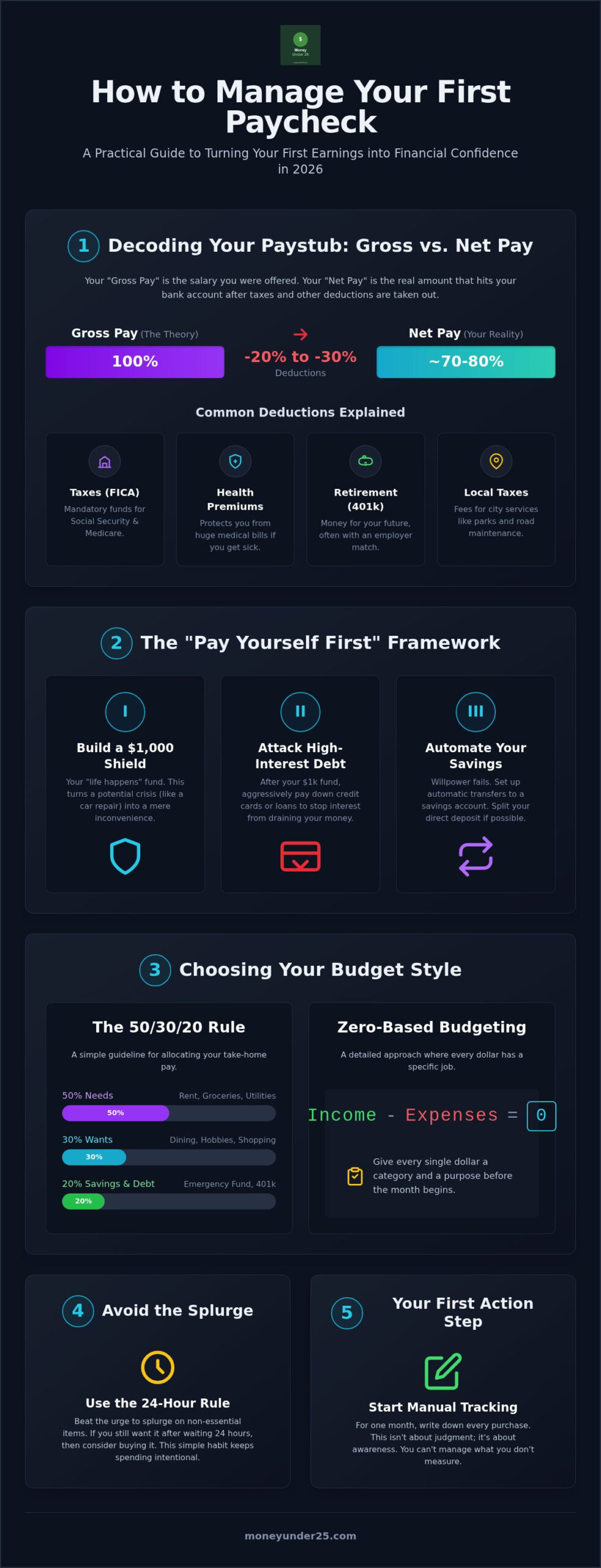
Your net pay is the only number that actually exists in your real life, so ignore your gross salary when planning your monthly spending. Basing a budget on your hourly rate alone is a recipe for debt because it ignores the 20% to 30% that disappears to taxes and benefits. Understanding these foundational personal finance principles helps you see your paycheck as a tool rather than a mystery. Always check your digital portal to confirm your “Take-Home” amount before signing a lease or committing to a new subscription.
Taxes and Deductions 101
Think of tax withholdings as pre-paying your future self. By taking a bit out of every check, the government ensures you don’t face a terrifying bill when tax season rolls around in April. It is a built-in safety net that keeps your finances predictable. Beyond standard income tax, you will see a line for FICA. This stands for the Federal Insurance Contributions Act, which is a mandatory contribution to Social Security and Medicare. It is essentially a gift to your future self and a way to support the community members who need it now.
You might also see deductions for health insurance or a 401k. While these make your check smaller today, they are actually saving you from massive expenses later.
- Health Premiums: These protect you from five-figure hospital bills if you get sick or injured.
- Retirement Contributions: This money goes straight into an account you own, often with a “match” from your boss that acts like a guaranteed bonus.
- Local Taxes: Some cities charge a small fee to keep your parks clean and your streets paved.
These “invisible” costs are part of being a high-functioning adult, and seeing them clearly helps you stay in control of your journey.
The 3-Step “Pay Yourself First” Framework
You just figured out your net pay. Now, what do you do with it? Most people pay their bills, buy groceries, go out with friends, and save whatever is left over. That is a mistake. If you wait until the end of the month to save, there is usually nothing left. “Paying yourself first” means your savings are a non-negotiable bill you pay to your future self before you spend a single cent elsewhere. It is the most effective strategy when learning how to manage first paycheck because it treats your goals as priorities rather than afterthoughts.
This framework is about building a foundation that can’t be shaken. When you prioritize your own stability, you move from a state of financial uncertainty to one of quiet confidence. You aren’t just hoarding cash; you are buying your future freedom. This is where using a structured tool for capital oversight can help you visualize your progress and stay motivated as you watch your balances grow.
Why $1,000 Is the Magic Number
A $1,000 cushion is your “life happens” fund. It stops a flat tire or a broken phone screen from becoming a high-interest credit card debt. Think of it as a shield. Before you focus on investing or big purchases, hit this target. It provides a level of peace of mind that math alone cannot explain. It turns a potential crisis into a mere inconvenience. If you hit this goal first, you’ll feel more in control of your life than ever before.
Once that shield is up, look at high-interest debt. If you have credit card balances or private loans with high rates, they are draining your progress. Pay those down aggressively after you have your starter emergency fund. This prevents interest from eating your hard-earned money. It is the fastest way to ensure your future checks stay in your pocket.
Automation: Your Secret Weapon
Willpower is a finite resource. If you have to decide to save every single month, you will eventually fail. Automation removes the decision entirely. Most employers allow you to split your direct deposit between two accounts. This is the ultimate hack for how to manage first paycheck without feeling the pinch.
- Set up a fixed amount, like $50 or $100, to go straight to a separate savings account.
- The remaining balance goes to your checking account for bills and lifestyle.
- You never see the savings in your main balance, so you never feel tempted to spend them.
The psychological benefit is huge. You aren’t losing money; you are simply adjusting your lifestyle to fit your actual available cash. By making saving invisible, you ensure it actually happens every single time you get paid.
Choosing Your Budget Style: 50/30/20 vs. Zero-Based
You have automated your savings and finally understand your paystub. Now you need a day-to-day system for what is left. Selecting the right framework is how to manage first paycheck without feeling like you are constantly broke. Most young adults thrive by picking one of two main styles: the balanced 50/30/20 rule or the highly detailed zero-based budget. Both work, but they serve different personalities and financial situations.
The 50/30/20 Breakdown for Beginners
Think of this as the “set it and forget it” method. It is perfect if you want a general guideline without tracking every single cent. You divide your take-home pay into three buckets. First, 50% goes to your needs. This covers rent, utilities, and groceries. Second, 30% is your “fun fund” for wants like dining out or streaming services. Finally, 20% goes toward your financial goals, like that $1,000 emergency fund we discussed earlier.
The beauty of this style is its simplicity. It forces you to keep your fixed costs low. If your rent takes up 60% of your check, you immediately know you need to adjust your lifestyle. It provides a quick reality check on your spending habits and keeps your lifestyle from growing faster than your income.
Zero-Based Budgeting: The Precision Method
If you often wonder where your money went at the end of the month, this method is for you. In zero-based budgeting, every single dollar gets a job. Your income minus your expenses should equal exactly zero. This does not mean you have zero dollars in your bank account. It means every dollar is assigned to a category, whether that is “Electricity,” “New Shoes,” or “Savings.”
This method is often the best budget style for entry-level salaries because it leaves no room for mystery spending. It also uses “sinking funds” for irregular costs. If your car registration costs $120 once a year, you set aside $10 every month. When the bill arrives, you already have the cash. It turns potential emergencies into planned events and gives you total control over your capital.
Tracking variable expenses like gas or groceries can feel like a chore, but it is necessary at first. Try manual tracking for the first thirty days. Use a simple app or a notebook to write down every purchase. This habit reveals the small leaks, like the $6 coffee or the $15 subscription you forgot to cancel, that can sink a budget. Once you see the patterns, you can switch to an automated tool to keep your finance management running smoothly.
Avoiding the “First Check” Trap: How to Treat Yourself Wisely
You have seen the taxes. You have set up your automation. Now comes the hardest part of the journey: actually keeping the money in your account. That first deposit often feels like “found money,” even though you traded forty hours of your life to earn it. The urge to spend it all immediately is a powerful biological response, but learning how to manage first paycheck means finding a balance between celebration and discipline.
The Psychology of the First Paycheck
It is important to validate your hard work. You spent years in school or training to reach this moment, and your brain naturally wants a reward. This is known as the “Reward Loop.” If you practice complete deprivation and save every single cent, you will eventually burn out and go on a spending binge. Instead of fighting your nature, work with it. Pick one meaningful purchase that marks the occasion rather than wasting the balance on ten small items you will forget by next week. A single, high-quality reward feels more like a milestone and less like a leak in your budget.
To keep your impulses in check, use the 24-Hour Rule. If you see something online or in a store that you “must have,” wait one full day before hitting the buy button. Usually, the dopamine hit fades within a few hours, and you will realize you don’t actually need the item. Another trick is setting a “Celebration Cap.” Limit your first-check splurge to a fixed percentage, like 5% or 10% of your take-home pay. This gives you the “guilt-free” spending you crave without sabotaging your $1,000 emergency fund goal.
You must also watch out for lifestyle creep. This is the silent killer of wealth where your spending rises exactly as fast as your income. When you get your first “real” check, you might feel the need to upgrade your car, your clothes, or your apartment immediately. If you let your expenses grow every time your salary does, you will stay stuck in the paycheck-to-paycheck cycle forever. Keep your “needs” at that 50% level we discussed earlier, even as your career progresses.
Smart Spending Habits for Your 20s
There is a massive difference between being “cheap” and being “frugal.” Being cheap is about spending the least amount of money possible, often resulting in poor-quality items that break quickly. Being frugal is about maximizing value. It means spending intentionally on things that last or bring genuine joy while cutting costs ruthlessly on things that don’t matter to you. Use a “Wants List” to track things you desire. When you have extra cash, look at your list and see what still feels important. You can start building these skills today by using a finance management checklist to audit your spending and prioritize your goals.
Building Your Financial Toolkit for 2026
You have the strategy in place, but you need the right tools to keep the momentum going. In 2026, the options for capital oversight range from old-school notebooks to AI-driven apps that track your spending in real-time. While automation is tempting, manual tracking remains the gold standard for beginners. When you physically record a purchase, you feel the “pain” of spending. This simple act is the fastest way to learn your habits and master how to manage first paycheck effectively.
Apps vs. Spreadsheets: Which Wins for You?
Choosing a tool depends on how much control you want. Spreadsheets offer total customization but require more work. Dedicated apps like Tiller Money bridge the gap by automatically pulling your bank data into a sheet. If you enjoy data and want a deep dive, a spreadsheet is your best bet. If you are busy and just want a quick overview, an app is better. Beginners should start with a simple tool before moving to complex systems. You can explore the pros and cons of Tiller vs. spreadsheets to see which fits your personality.
Regardless of the tool, you must schedule a weekly “Money Date.” Spend fifteen minutes every Sunday reviewing your transactions. Did you stay within your “Wants” budget? Is your emergency fund growing? This habit keeps your finances top-of-mind and prevents small errors from turning into month-long disasters. It is the secret to staying in control without feeling restricted.
Next Steps: Beyond Your First Check
Your first check is a milestone, but it is also a training ground for bigger goals. Once you are comfortable with your routine, start looking ahead. You can learn to organize your personal finances without the stress by building systems that scale with your income. This is especially important if you are preparing for your first apartment. Rent, security deposits, and utility setups require a different level of planning that your current budget should anticipate.
Managing your money early is the key to future success. Your first paycheck is just the beginning of a larger finance management plan that will carry you through your 20s. Stay consistent, keep your tools simple, and remember that you are building a life of freedom. You’ve got the plan; now just follow the path.
Take Control of Your Financial Future Today
Your first paycheck is more than just a deposit; it’s the beginning of your independence. You now know how to look past the gross pay and focus on the net reality of your check. By setting up automation and choosing a budget style that fits your life, you’re already ahead of most of your peers. Learning how to manage first paycheck early prevents years of stress and allows you to enjoy your success without the guilt of overspending.
We built this platform for young adults who are tired of corporate fluff and bank bias. Our practical tools are designed for real-world scenarios that actually matter to you. If you’re ready to build on this foundation, master your money with our Finance Management 101 guide. It’s straightforward and designed to help you win. You’ve got the plan and the tools. Now, take that first step with confidence. Your future self is already cheering you on.
Frequently Asked Questions
Is it okay to spend my entire first paycheck on something I want?
You should avoid spending the entire amount, but a small reward is a great idea. Complete deprivation often leads to a spending binge later. Aim to keep your splurge to 5% or 10% of the total. This balance ensures you mark the milestone without draining your bank account. It’s better to build the habit of saving a portion immediately so you stay in control of your future.
How much of my first paycheck should I realistically save?
Aim to save at least 20% of your take-home pay if your living expenses allow it. This follows the 50/30/20 rule discussed earlier. If your rent is high, even saving $50 is a massive win for your habits. The goal is consistency rather than a specific dollar amount. Starting small helps you learn how to manage first paycheck without feeling like you’re missing out on your social life.
What is the most important thing to do with my first paycheck?
The most critical move is starting your $1,000 “starter” emergency fund. This cash cushion protects you from unexpected costs like car repairs or medical bills. Having this money in a separate account gives you instant peace of mind. It stops you from reaching for a credit card when life gets messy. Prioritizing this fund before any big purchases is the ultimate foundation for long-term stability and confidence.
Should I start a retirement account with my very first paycheck?
You should definitely start contributing if your employer offers a 401k match. This is essentially a guaranteed bonus that grows over time. Even a small 3% contribution makes a huge difference due to compound interest. If you don’t have a workplace plan, consider opening a Roth IRA. Starting with your very first check makes the deduction feel normal rather than like a loss of income later in your career.
How do I track my spending if I only use a debit card?
Your bank’s mobile app is the easiest place to start since it records every transaction automatically. However, simply looking at the app isn’t enough. You should manually categorize your spending once a week in a spreadsheet or a notebook. This helps you notice patterns, like how much you actually spend on subscriptions or coffee. Taking an active role in tracking ensures your finance management stays precise and intentional every month.
What happens if my first paycheck is less than I calculated?
A lower-than-expected paycheck usually means you didn’t account for federal and state income taxes or FICA deductions. Log into your payroll portal and look at the “Earnings Statement” to see the breakdown. If the deductions look wrong, talk to your HR department immediately. Understanding these numbers is part of learning how to manage first paycheck and helps you budget more accurately for the next one. It’s a normal part of starting your first professional role.
Do I need a separate bank account for my savings?
Keeping your savings in a separate account is highly recommended. When your emergency fund is mixed with your spending money, it’s too easy to “borrow” from it for a night out. Choose a high-yield savings account at a different bank if possible. This extra step makes the money slightly harder to reach, which helps you stay disciplined. It also allows you to see your progress clearly as the balance grows.
How do I handle student loan payments with my first check?
Treat your student loan payment as a non-negotiable “Need” in your 50/30/20 budget. If you’re in a grace period, use this time to build your emergency fund first. Once payments start, set up an autopay system to ensure you never miss a due date. This often lowers your interest rate by a small percentage too. Managing these payments early keeps your credit score healthy and reduces your long-term stress.