Quick Answer
Neither platform consistently pays more — it depends on your city and time of day.
DoorDash: higher base pay ($2-10/order), larger market share, more orders in most cities.
Uber Eats: upfront pricing lets you see exact pay before accepting, better in dense urban areas.
Best strategy: sign up for both and run them simultaneously during peak hours.
Real effective hourly rate for active drivers: $15-25/hour on both platforms.
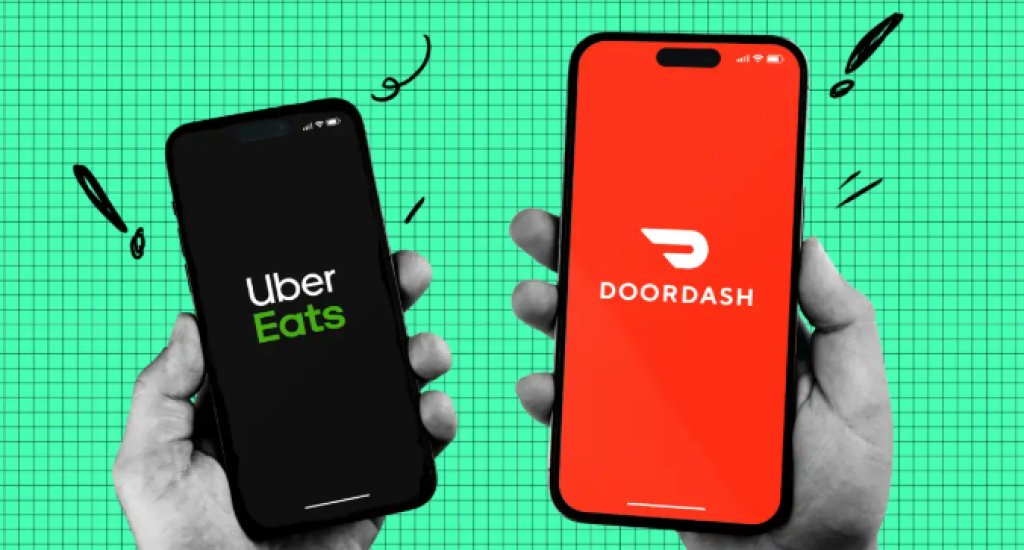
DoorDash and Uber Eats are the two largest food delivery platforms in the US, and the comparison between them for drivers is genuinely close. Neither is universally better — the right choice depends on your city, when you drive, and how you approach the work.
This guide uses real earnings data to compare both platforms honestly. The bottom line: most experienced drivers use both. But if you’re starting with one, this comparison tells you which to prioritize first. For a broader list of gig platforms beyond food delivery, see jobs like Instacart which covers grocery delivery apps that often pay more per hour than restaurant delivery.
According to the Bureau of Labor Statistics, delivery and transportation roles are among the fastest-growing flexible work categories. Both DoorDash and Uber Eats classify drivers as independent contractors — which means you pay self-employment taxes on all income. See how gig income is taxed for exactly what that means for your tax bill.
DoorDash vs Uber Eats: Side-by-Side Comparison
| DoorDash | Uber Eats | |
| Market share (US) | ~67% — largest platform | ~23% — strong in dense urban areas |
| Base pay per order | $2-10 (algorithm-based) | Upfront price shown before accepting |
| Tips | Separate, 100% to driver | Separate, 100% to driver |
| Effective hourly rate | $15-25/hour (active) | $15-23/hour (active) |
| Order volume | Higher in most markets | Higher in dense cities (NYC, LA, Chicago) |
| Peak pay bonuses | Yes — $1-5 extra per order | Yes — surge pricing during high demand |
| Acceptance rate impact | Matters for Top Dasher status | Less emphasis on acceptance rate |
| App quality | Navigation reliable, some driver complaints | Generally smoother driver experience |
| Best market types | Suburban and mid-size cities | Dense urban areas, college towns |
| Sign-up time | 24-48 hours | 24-72 hours |
How Each Platform Pays — The Details That Matter
DoorDash Pay Structure
DoorDash pays drivers a base pay per order ($2-10) determined by an algorithm that considers distance, estimated time, and order complexity. Tips are added on top and 100% go to the driver.
Peak Pay: DoorDash adds $1-5 per order during high-demand windows — typically Friday-Sunday evenings, lunch peaks, and bad weather. These windows significantly raise effective hourly pay. An order worth $6 base pay becomes $9-11 with Peak Pay.
Top Dasher: DoorDash’s status program gives priority access to orders and lets you dash anytime without scheduling if you maintain 4.7+ rating, 70%+ acceptance rate, and 95%+ completion rate. For part-time drivers who want maximum flexibility, Top Dasher status makes a meaningful difference in slow markets.
The acceptance rate debate: DoorDash recommends accepting most orders, but experienced drivers know that declining low-pay orders raises effective hourly rate. The tradeoff: lower acceptance rate may reduce order flow in competitive markets.
Uber Eats Pay Structure
Uber Eats shows drivers the exact upfront pay for each order before they accept — no guessing what the base pay will be. The offer includes base fare plus estimated tip, though actual tip may differ.
Upfront pricing advantage: Knowing total estimated pay before accepting lets experienced drivers choose high-value orders more easily. This transparency is Uber Eats’ clearest advantage over DoorDash.
Surge pricing: Uber Eats uses surge pricing during high-demand periods — the app shows multipliers (1.2x, 1.5x, 2x) on the driver map. Positioning yourself in surge zones before demand peaks is a common strategy among high-earning Uber Eats drivers.
Acceptance rate: Uber Eats places less emphasis on acceptance rate than DoorDash. Declining low-value orders has fewer consequences on the platform, which many drivers prefer.
Real Earnings: What Drivers Actually Make
Effective hourly rate — pay for actual working time, not total hours including waiting — is what matters:
| Scenario | DoorDash | Uber Eats |
| Friday night peak (8-11pm) | $20-28/hour with Peak Pay + tips | $18-25/hour with surge pricing + tips |
| Weekend lunch (11am-2pm) | $16-22/hour | $15-21/hour |
| Weekday evening (5-8pm) | $14-20/hour | $14-19/hour |
| Slow weekday afternoon | $10-14/hour — not worth it | $9-13/hour — not worth it |
| Dense urban area (NYC, LA) | Strong — high volume | Often better — higher tips, more orders |
| Suburban or mid-size city | Usually stronger — larger market share | Fewer orders but still viable |
Company-quoted ‘average earnings’ include tips but assume optimal conditions. Real effective hourly rate counting waiting time, mileage, wear on your car, and self-employment taxes (25-30% of income) is often $10-16/hour net. Factor in your car costs before treating delivery as a primary income source.
Which Pays More — By Where You Live
| Market type | Winner | Why |
| Major dense city (NYC, SF, Chicago) | Uber Eats | Higher customer density, larger tip culture, strong surge pricing. |
| Mid-size metro (Nashville, Columbus, Tampa) | DoorDash | DoorDash has 2-3x the order volume in most mid-size markets. |
| Suburban areas | DoorDash | Dominant market share outside dense urban cores. |
| College towns | Tie / both | Both platforms do well near universities. Run both simultaneously. |
| Rural areas | Neither pays well | Order density too low for consistent income on either platform. |
The most reliable way to know which is better in your specific area: sign up for both, drive both for two full weekends, and compare your total earnings and orders per hour. No data source beats your own local experience.
Peak Hours: When to Drive on Each Platform
Both platforms have predictable high-demand windows. Driving outside these windows dramatically lowers your effective hourly rate:
| Time window | DoorDash | Uber Eats |
| Fri-Sat 6-10pm | 🔥 Highest volume + Peak Pay | 🔥 Surge pricing, high tips |
| Sun 11am-2pm | 🔥 Strong brunch/lunch demand | 🔥 Good in urban areas |
| Mon-Thu 11am-1pm | Moderate — lunch rush | Moderate |
| Mon-Thu 5-8pm | Decent — weekday dinner | Decent in busy markets |
| Bad weather | 🔥🔥 Spike in orders + tips | 🔥🔥 Same — rain/snow = surge |
| Weekday afternoons | ❌ Slow — not worth starting | ❌ Low demand |
| Late night (10pm+) | Bar close rush in some cities | Similar |
Bad weather is the most underrated earning opportunity on both platforms. Rain and snow reduce the number of active drivers while increasing customer orders. A two-hour rain window on a Saturday can produce the same earnings as four hours on a clear day.
The Strategy That Beats Both: Running Them Simultaneously
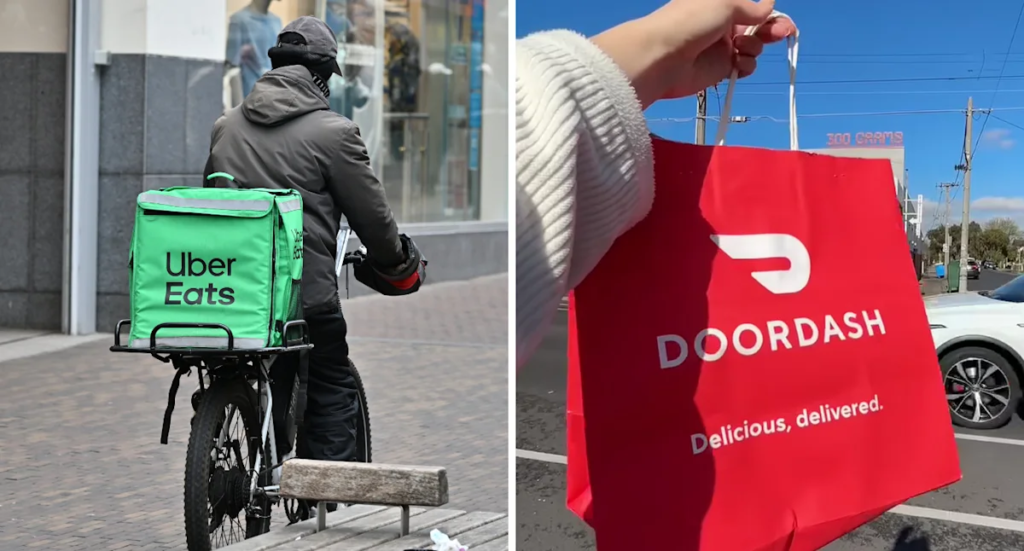
The highest-earning delivery drivers don’t choose between DoorDash and Uber Eats — they run both at the same time and accept whichever order comes in first with the best pay-to-distance ratio.
- How it works: Both apps run in the background. When an order comes in on either, you accept the better one and pause the other briefly during delivery. Most experienced drivers keep both active during peak hours.
- Priority rule: Accept whichever order pays more per mile. A $7 DoorDash order covering 1.5 miles beats an $8 Uber Eats order covering 4 miles every time.
- The practical limit: Running two apps simultaneously requires attention management. Start with one platform until you’re comfortable with the routing and pickup process, then add the second.
- Third option: Add Instacart during slower food delivery hours. Grocery delivery peaks mid-morning and mid-afternoon — filling the slow periods between food delivery peaks. See jobs like Instacart for the Instacart earnings breakdown.
The Real Cost of Delivery Driving — Net Pay Calculation
Gross hourly rate is not what you take home. Delivery driving has real costs that must be subtracted:
| Cost | Estimate | Notes |
| Self-employment tax | 15.3% of earnings | On top of regular income tax. Set aside 25-30% of every payment. |
| Vehicle wear and depreciation | $0.10-0.20/mile | IRS mileage deduction at $0.67/mile (2026) helps offset this. |
| Gas | $0.08-0.15/mile | Varies by car and gas prices. Higher mpg vehicle = lower cost. |
| Insurance (business use) | $20-50/month | Personal auto insurance may not cover commercial delivery. Check your policy. |
| Phone mount, insulated bag | $30-60 one-time | Deductible as business expense. |
Net pay reality: At $20/hour gross with 15 miles driven, deducting taxes (25%) and vehicle costs ($0.20/mile) leaves approximately $12-14/hour net. This is still meaningful income for flexible hours, but not the $20-25/hour some marketing implies. Track your miles using a mileage app — the IRS deduction ($0.67/mile) is the single most important tax deduction available to delivery drivers. See how gig income is taxed for the complete tax guide.
FAQs
Does DoorDash or Uber Eats pay more for drivers?
Neither platform consistently pays more — effective hourly rate is similar at $15-25/hour during peak hours on both. DoorDash has higher order volume in most suburban and mid-size city markets. Uber Eats often pays better in dense urban areas with high tip culture. According to the Bureau of Labor Statistics, gig delivery income varies significantly by market and time of day. The most accurate answer for your situation: sign up for both, work both for two weekends, and compare your local results directly.
Can you drive for DoorDash and Uber Eats at the same time?
Yes — this is called multi-apping and it’s legal and widely practiced. You run both apps simultaneously and accept whichever order comes in first with the better pay-to-distance ratio. The main challenge is attention management — most experienced multi-appers start with one platform until the process is routine, then add the second. A third option is adding Instacart during mid-morning hours when food delivery is slow.
How much can you realistically make with DoorDash or Uber Eats?
During peak hours (Friday-Sunday evenings, weekend lunch, bad weather), effective hourly rate is $18-25/hour including tips before expenses. After accounting for self-employment tax (15.3%), gas, and vehicle wear, net effective pay is typically $12-17/hour. Working 15 peak hours per week produces approximately $800-1,200/month gross before expenses. This is solid supplemental income but challenging as a primary income source without a highly efficient vehicle.
Which is better for beginners: DoorDash or Uber Eats?
DoorDash for most beginners — it has higher order volume in most markets (more practice), a large driver community with extensive tips and local knowledge, and the highest market share means more consistent orders during the learning period. Start with DoorDash, learn your market for 2-3 weeks, then add Uber Eats as a second platform once you’re comfortable with the delivery process.
Do you need a car to drive for DoorDash or Uber Eats?
Not necessarily. Both platforms allow bike and scooter delivery in dense urban areas. In cities like NYC, Chicago, and San Francisco, bike delivery is common and competitive during peak hours because bikes can move faster in traffic. Outside dense urban areas, a car is practically required for both platforms due to order distances. For delivery alternatives that work in more markets without a car, see jobs similar to Shipt which includes platforms that allow on-foot delivery in some areas.
The Bottom Line
DoorDash has more orders in most markets. Uber Eats pays better in dense cities and gives you upfront pricing. Both pay $15-25/hour during peak hours before expenses.
The right answer for most new drivers: start with DoorDash in your first two weeks, then add Uber Eats as a second platform. Run both during peak hours — Friday and Saturday evenings, Sunday lunch, and any time it’s raining — and decline slow weekday afternoon orders on either platform.
After two full weekends on both platforms, you’ll know which works better in your specific market. Most experienced drivers end up using both. For other flexible income apps beyond food delivery, side hustles covers 15 options ranked by pay — including grocery delivery apps that often pay more per hour than restaurant delivery during peak windows. And once the income is coming in, save $500 a month shows how to build the savings habit around variable gig income.
Sources
1. Bureau of Labor Statistics — transportation and delivery occupations data
2. IRS — self-employment tax and mileage deduction rates
3. Federal Trade Commission — gig worker classification guidance