Quick Answer — Best Free Sources
Free credit REPORT (full history): AnnualCreditReport.com — all 3 bureaus, free weekly
Free FICO Score: Discover Credit Scorecard (free to anyone, no card needed)
Free credit score (VantageScore): Credit Karma — Equifax + TransUnion
Free FICO via your bank: Chase, Citi, Bank of America, Wells Fargo all offer it in-app
None of these hurt your credit — checking is always a soft inquiry.
Checking your credit score is free. It does not hurt your credit. And it takes about five minutes. The only real barrier is knowing where to go and what you’re actually looking at when you get there.
This guide covers the best free sources, the important difference between the score you see on Credit Karma and the score a lender actually uses, and what to do in the 10 minutes after you check.
The Best Free Sources — What Each One Gives You
| Source | Score type | Bureau | Notes |
| AnnualCreditReport.com | Report only (no score) | All 3 | Full credit report — accounts, history, inquiries. Free weekly. Authorized by federal law. |
| Discover Credit Scorecard | FICO Score 8 | Experian | Free to anyone — no Discover card required. Most lenders use FICO 8. Updated monthly. |
| Credit Karma | VantageScore 3.0 | Equifax + TransUnion | Free, updated frequently. Not the score most lenders use — but useful for tracking trends. |
| Chase Credit Journey | VantageScore 3.0 | Experian | Free to anyone, no Chase account needed. Weekly updates. |
| Your bank or card app | Varies (FICO or VS) | Varies | Chase, Citi, BofA, Wells Fargo, Capital One all offer free scores in their apps. Check yours. |
| Experian free account | FICO Score 8 | Experian | Free account gives one free FICO score. Paid tiers add monitoring and other bureaus. |
| myFICO.com (paid) | Multiple FICO versions | All 3 | $29.95/month for all 3 bureaus + all FICO versions. Only needed before a major loan application. |
For most people, use Discover Credit Scorecard for your FICO score and AnnualCreditReport.com for your full report. Those two together give you everything you actually need — for free.
FICO vs VantageScore — The Difference That Matters
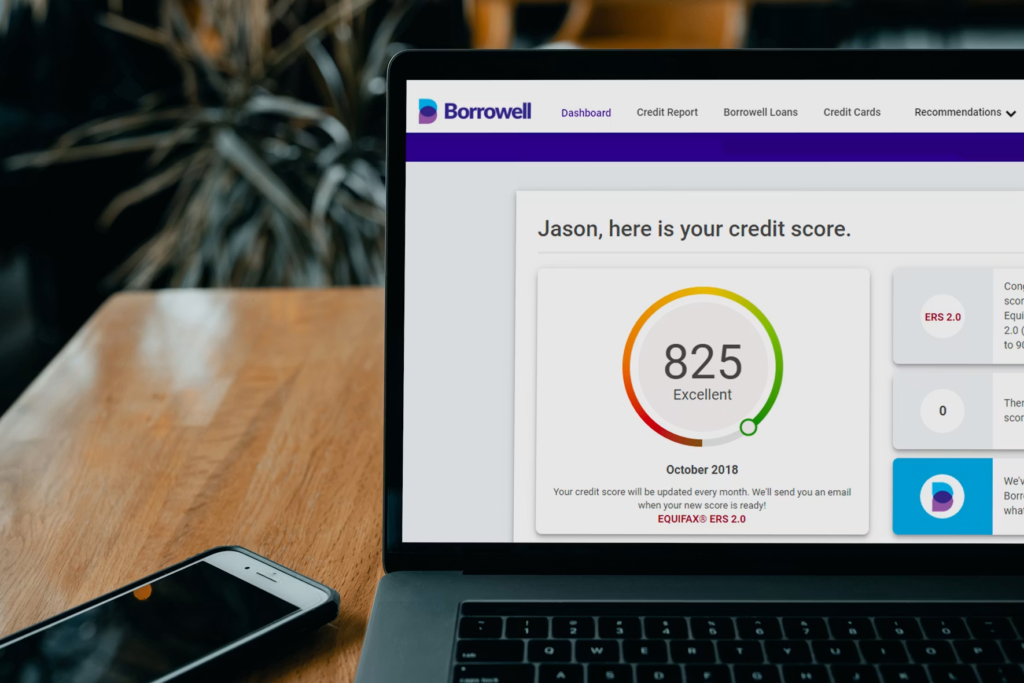
This is the most important thing to understand before you check your score.
Credit Karma shows your VantageScore — not your FICO score. These are two different scoring models developed by different companies. They use similar factors but weight them differently and can produce scores that differ by 20-50 points.
According to myFICO, approximately 90% of top lenders use a FICO score when making a credit decision. When you apply for a car loan, apartment, credit card, or mortgage, the lender almost certainly pulls a FICO score — not your VantageScore.
| FICO Score 8 | VantageScore 3.0 | |
| Used by lenders | ~90% of lending decisions | Some lenders; Credit Karma; many bank apps |
| Free sources | Discover, Experian, most bank apps | Credit Karma, Chase Credit Journey, Capital One |
| Score range | 300-850 | 300-850 |
| Paid collections | Counts against you | Ignored in VS 3.0 (outdated model) |
| Medical debt | Counted (FICO 8) | Ignored or reduced (newer VS models) |
| Best use | Know your real lender score | Track trends week to week |
The practical implication: if your Credit Karma score is 680, your actual FICO score might be 640 or 710 — you can’t know without checking a FICO source. For everyday tracking, VantageScore is fine. Before applying for anything significant, check your FICO.
Seeing a 700 on Credit Karma and assuming you’ll get approved at that score is one of the most common credit mistakes. Always verify your FICO score before a loan or apartment application.
Why Your Score Differs Across the Three Bureaus
Equifax, Experian, and TransUnion are three separate companies that maintain separate credit reports. Lenders report to some or all of them — but not always all three.
This means your credit report at each bureau may contain slightly different information, and your score calculated from each report will be slightly different. A 690 at Experian, 705 at TransUnion, and 685 at Equifax is completely normal.
What lenders pull: For major loans like mortgages, lenders typically pull all three bureau scores and use the middle score. For credit cards and auto loans, they usually pull one bureau — which one varies by lender.
What you should do: Check your full credit report from all three bureaus at AnnualCreditReport.com. Look for errors on each one, because a mistake on one bureau’s report doesn’t automatically show up on the others.
Does Checking Your Credit Score Hurt It?

No. Checking your own credit score is always a soft inquiry — it has zero impact on your score, regardless of how often you do it.
According to the Federal Trade Commission, soft inquiries (including your own credit checks, preapproval checks from lenders, and employer background checks) are never factored into credit scoring. Only hard inquiries — from lenders when you formally apply for credit — affect your score.
| Type of inquiry | Affects score? | Example |
| Soft inquiry | No — never | You checking your own score, Credit Karma, preapproval offers |
| Hard inquiry | Yes — 5-10 pts | Applying for a credit card, loan, mortgage, or apartment |
How Often to Check Your Credit Score
There’s no benefit to checking daily. But checking once and never looking again misses problems that develop over months.
| Frequency | What to do |
| Monthly | Check your score via Discover or your bank app. Note the number and compare to last month. Unexpected drops need investigation. |
| Quarterly | Pull one bureau report from AnnualCreditReport.com. Rotate: Experian in Jan, TransUnion in Apr, Equifax in Jul, all three in Oct. |
| Annually | Pull all three reports at once from AnnualCreditReport.com and review for errors, unfamiliar accounts, or outdated items. |
| Before applying | Always check your FICO score (not VantageScore) 1-2 months before any major credit application. Leaves time to fix errors. |
What to Do in the 10 Minutes After You Check

Checking your score is step one. Step two is doing something with the information.
If you have no score yet (under 18 or no credit history):
You need at least one account reporting to the bureaus before a score generates. The fastest way is becoming an authorized user on a family member’s account, or opening your first card — see best credit cards for no credit history for options that work with no credit history. The full starting strategy is in how to build credit at 18.
If your score is under 580:
Start by pulling your full report from AnnualCreditReport.com to see exactly what’s causing the low score. Look for errors, collections, or high utilization. Then check what hurts your credit score to understand which items are doing the most damage. And see how to increase your credit score for the fastest recovery moves.
If your score is 580-669 (fair):
You can qualify for some credit products but at higher interest rates. The priority is identifying your top 2-3 negative factors — usually utilization, payment history, or a thin file — and addressing those specifically. See credit score ranges for what this score range gets you in real life.
If your score is 670-739 (good):
You’re in solid territory. Most credit cards, car loans, and apartments are accessible at this level. Focus on maintaining what’s working: pay on time, keep utilization under 30%, don’t apply for too many accounts at once. Incremental improvements from here make a real difference on mortgage rates.
If your score is 740+ (very good to exceptional):
You have access to the best rates on almost everything. The main goal is protection — avoiding the mistakes in what hurts your credit score that would drop you from this level. Check your report annually for errors; that’s your biggest risk at this score range.
What You Cannot Get for Free (And Whether You Need It)

Free credit score services don’t give you everything. Here’s what requires payment and whether it’s actually necessary:
| What it is | Cost | Do you need it? |
| All 3 FICO scores at once | ~$30/mo | Only before a major purchase (mortgage, car). Free sources cover everyday needs. |
| Real-time monitoring (alerts) | $10-30/mo | Not necessary for most people. Free monthly checking achieves similar protection. |
| Industry-specific FICO scores | Paid only | FICO Auto Score 8, FICO Mortgage Score, etc. Only matters when applying for that specific product. |
| Credit freeze/unfreeze | Free | Completely free at all 3 bureaus. Smart if you’re not applying for credit soon. |
| Credit lock | Varies | Similar to freeze but bureau-specific product. Free freeze is more powerful — use that. |
FAQs
Can I check my credit score for free without a credit card?
Yes. Discover Credit Scorecard is completely free and requires no Discover card or account. You create a free account on their site and receive your FICO Score 8 from Experian, updated monthly. Chase Credit Journey also provides a free VantageScore with no Chase account required. Both are genuinely free with no credit card needed. For your full credit report, AnnualCreditReport.com is federally authorized and completely free.
What credit score do you start with at 18?
You don’t start with any credit score at 18. Credit scores only generate after you’ve had at least one account open and reporting for 6 months. If you turn 18 today and have never been on a credit account, you have no score — not a zero, but no score at all. The term for this is “credit invisible.” You can check your report at AnnualCreditReport.com to confirm what’s there.
Is Credit Karma accurate?
Credit Karma is accurate for what it shows — your VantageScore 3.0 from Equifax and TransUnion. The VantageScore itself is calculated correctly. The issue is that it’s a different scoring model than what most lenders use. Your Credit Karma score can be 20-50 points different from your FICO score in either direction. Use Credit Karma for trend tracking; use Discover Credit Scorecard for your actual FICO before any major application.
How do I check all 3 credit bureaus for free?
Go to AnnualCreditReport.com, the only site authorized by federal law to provide free annual credit reports. Since the pandemic, all three bureaus (Equifax, Experian, TransUnion) have made their reports available free weekly — not just once per year. This is the only place that gives you the full report, including every account, payment history, and inquiry. The site does not provide your score — only the full report.
Why is my credit score different on different sites?
Two reasons: different scoring models (FICO vs VantageScore) and different bureaus. Each bureau maintains a separate credit file, and your score calculated from each file will differ slightly based on what each bureau has on record. Additionally, a FICO score and a VantageScore from the same bureau will likely show different numbers because they weight factors differently. This is normal — not a sign that one is wrong.
The Bottom Line
Checking your credit score is free, safe, and takes five minutes. The best starting point: Discover Credit Scorecard for your FICO score (what lenders actually use) and AnnualCreditReport.com for your full credit report.
Do it today. Then set a monthly reminder to check your score and a quarterly reminder to pull one bureau report. The people who catch credit errors and score drops early are the ones who check regularly — not the ones who look once and forget about it.
Once you know your number, see credit score ranges to understand what it means in practical terms — what rates you qualify for, what doors it opens or closes. And if the number is lower than you’d like, how to increase your credit score covers the specific steps that move it fastest.
Sources
1. AnnualCreditReport.com — federally authorized free credit report access
2. Consumer Financial Protection Bureau — credit reports and scores guide