Ranked by Damage — Worst First
1. Missed or late payment (30+ days) — drops 60-110 points, stays 7 years
2. Account sent to collections — drops 100+ points, stays 7 years
3. Bankruptcy — drops 130-240 points, stays 7-10 years
4. Maxing out a credit card — drops 25-45 points (recovers when paid)
5. Closing a credit card — reduces available credit and may lower score
6. Applying for too much credit at once — each hard inquiry drops 5-10 points
7. High credit utilization — 30%+ starts hurting, 50%+ hurts significantly
8. Cosigning on a defaulted loan — their missed payments appear on your report
9. Errors on your credit report — incorrect negative items lower your score
10. Not using credit at all — 0% utilization and dormant accounts can reduce score
Your credit score can drop in a single billing cycle. Building it back takes months. Understanding exactly what causes the drop — and how much damage each action does — is the fastest way to protect what you’ve built.
This guide covers the 10 things that hurt your score most, ranked by impact. For each one: how many points it typically costs, how long it stays on your report, and how to recover. If you want the positive side — what builds your score — see how to build credit at 18.
Damage Table — How Long Each Negative Stays
| What happened | Score drop (estimate) | Stays on report | Recovers? |
| Missed payment (30 days late) | 60–110 pts | 7 years | Yes — but slowly. Score improves as late payment ages. |
| Collection account | 100+ pts | 7 years | Partial — paying it helps but doesn’t remove it for 7 years. |
| Bankruptcy | 130–240 pts | 7-10 years | Yes — score can reach 620-660 within 2 years with new positive history. |
| Maxed out credit card (90%+) | 25–45 pts | Until paid | Fast — pays down → score recovers within 1-2 billing cycles. |
| Closing old credit card | 5–20 pts | Permanent | Partial — account history stays 10 years but available credit reduced. |
| Multiple hard inquiries | 5–10 pts each | 2 years | Yes — impact fades after 12 months; removed at 24 months. |
| High utilization (50%+) | 25–50 pts | Until paid | Fast — utilization is recalculated every billing cycle. |
| Cosigning defaulted loan | Same as primary | 7 years | Only if loan is brought current. Their mistake is your damage. |
| Credit report errors | Varies | Until disputed | Yes — disputing removes errors, score recovers immediately. |
| Zero activity / dormant cards | 5–15 pts | Until active | Yes — one small charge per month reactivates the account. |
Score drop estimates are based on myFICO data for someone with a score in the 700-750 range. People with lower starting scores typically see smaller drops; people with higher scores see larger drops (more to lose). The exact impact depends on your full credit profile.
1. Missed or Late Payment — The Biggest Damage

Payment history is 35% of your FICO score — the single largest factor. A payment that’s 30 or more days past due triggers a late payment report to the credit bureaus. According to myFICO, this can drop a score of 700 by 60-110 points in a single month.
The math: Someone with a 750 score who misses one payment can see their score drop to 640-690. That’s the difference between prime and near-prime rates on everything from car loans to apartments.
How long it hurts: 7 years from the date of the missed payment. The impact does diminish over time — a 3-year-old late payment hurts less than a 3-month-old one — but it stays on your report for the full 7 years.
The fix: Set up autopay for the minimum due on every account today. You’ll still want to pay more, but autopay ensures no payment is ever 30+ days late due to forgetting.
2. Account Sent to Collections
When you miss enough payments that the original lender gives up and sells the debt to a collections agency, a new negative item appears on your report — separate from and additional to the original late payments.
Damage: 100+ points. A collections account is one of the most damaging items a credit report can have, particularly on a relatively new or thin file where there’s less positive history to offset it.
Paying it: Paying a collection account removes the debt obligation but does not automatically remove it from your credit report. Under current FICO scoring rules, a paid collection still hurts your score — though less than an unpaid one. FICO 9 ignores paid collections entirely, but most lenders still use FICO 8.
Removal: Collection accounts fall off your report 7 years from the original delinquency date — not from the date the collection was created. If an account goes to collections in 2026, it stays until 2033 regardless of when the collection agency acquired it.
3. Maxing Out a Credit Card
Credit utilization — how much of your available credit you’re using — is 30% of your FICO score. Using 90%+ of a single card’s limit can drop your score 25-45 points even if you pay the bill on time. For more on how this factor works, see credit utilization.
The good news: Utilization is the fastest factor to recover. Pay down the balance, and your score rebounds within 1-2 billing cycles — as soon as the lower balance is reported. Unlike late payments, high utilization leaves no lasting mark once corrected.
The target: Under 30% on each card. Under 10% for maximum score benefit. Under 1% occasionally triggers a small negative because it signals zero activity.
Maxing a card right before applying for a loan is one of the costliest timing mistakes in credit. Even if you plan to pay it off immediately, the high balance gets reported at your statement closing date — before the payment shows.
4. Applying for Too Much Credit at Once
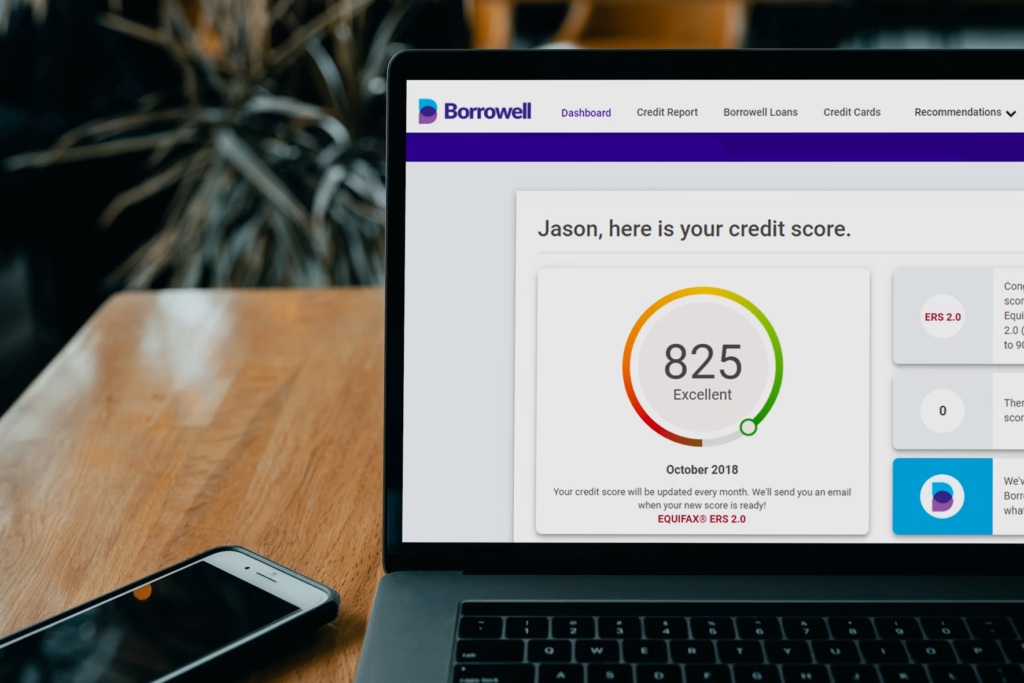
Every time you apply for a credit card, loan, or mortgage, the lender performs a hard inquiry on your credit report. Each hard inquiry drops your score by approximately 5-10 points.
Why it matters: Multiple applications in a short period signal financial stress to lenders — the pattern looks like someone who urgently needs money. Three credit card applications in two months costs 15-30 points before you’ve done anything else wrong.
Exceptions: Rate shopping for a mortgage or auto loan is different. Multiple inquiries for the same type of loan within a 14-45 day window are grouped and counted as a single inquiry. This allows you to compare lenders without extra score damage.
Recovery: Hard inquiries fall off your report completely after 2 years. Their scoring impact typically fades significantly after 12 months. The damage from a single inquiry is small — the problem is stacking several.
5. Closing an Old Credit Card
Closing a credit card has two effects: it removes that card’s credit limit from your available credit (pushing utilization up) and it eventually reduces your average account age.
Example: You have two cards — a 5-year-old card with a $3,000 limit and a 1-year-old card with a $2,000 limit. Total available: $5,000. If you close the older card, available credit drops to $2,000. If you were carrying $500 in balances, your utilization jumps from 10% to 25%.
Account age: Closed accounts stay on your report for up to 10 years and continue aging during that time. The immediate impact of closing a card is mainly from the credit limit reduction, not account age — though once the account eventually falls off your report, average age takes another hit.
When to close anyway: If a card has a high annual fee you’re not using, closing it may be worth the score impact. If it’s a free card you’re not using, keep it open with a small charge each month to prevent the issuer from closing it for inactivity.
6. Cosigning on Someone Else’s Loan
When you cosign a loan, you take on equal responsibility for the debt. Every payment the primary borrower makes — or misses — appears on your credit report exactly as it does on theirs.
The risk: If the person you cosign for misses payments or defaults, your credit takes the same damage as theirs. You have no control over their payments and often no way to remove yourself from the loan once it’s in place.
The rule: Only cosign for someone you would lend money to directly. If they default, you will owe the full amount AND carry the credit damage. This applies to student loans, car loans, and personal loans equally.
7. Errors on Your Credit Report
A Federal Trade Commission study found that approximately 1 in 5 credit reports contains an error significant enough to affect a lending decision. These errors can include: accounts that aren’t yours, late payments reported incorrectly, balances that are wrong, or accounts that should have fallen off but haven’t.
Why this matters: An error you haven’t found is actively suppressing your score right now. Many people don’t check their credit reports until they apply for something and get a worse rate than expected.
Fix: Get your free annual credit reports at AnnualCreditReport.com. Review each of the three bureau reports — Experian, Equifax, and TransUnion — because errors can appear on one but not the others. Dispute any inaccurate information directly with the bureau online. Errors must be investigated and corrected or removed within 30 days under federal law.
8. Not Using Credit at All
Counterintuitively, having credit accounts you never use — or having no credit accounts at all — can slightly hurt your score. The scoring model needs activity to assess your risk level.
Dormant cards: If you haven’t used a card in 12+ months, some issuers close the account for inactivity. This removes the credit limit and eventually the history from your active file. One small charge per month — a streaming subscription, a gas fill-up — prevents this.
Zero utilization: Having credit cards but using 0% of the limit consistently triggers a slight negative because it signals no recent credit activity. A 1-3% utilization rate — which means using the card and paying it in full — scores better than 0%.
Things That Do NOT Hurt Your Credit Score (Common Myths)
Several common beliefs about credit damage are wrong. These things do not hurt your FICO score:
| The myth | The reality |
| Checking your own credit score hurts it | False. Checking your own score is a soft inquiry — it does not affect your score. Check as often as you want. |
| Your income affects your credit score | False. Income is not in your credit report and is not a factor in credit scores. Lenders consider income separately. |
| Being denied for a card hurts your score | Partially false. The hard inquiry from applying drops your score 5-10 points. The denial itself does not add further damage. |
| Carrying a balance builds credit faster | False. Paying in full each month is always better. Carrying a balance only costs interest — it provides no credit-building benefit. |
| Married people share credit scores | False. Credit scores are always individual. Marriage does not merge credit reports or scores. |
| Paying off a collection removes it | Mostly false under FICO 8 (still used by most lenders). Paid collections still show on your report for 7 years — paying removes the debt but not the record. |
Recovery Timeline — How Long to Bounce Back
Every negative item gets less damaging over time, even before it falls off your report. Here’s a realistic recovery timeline:
| Negative item | Recovery time | What recovery looks like |
| High utilization | 1-2 months | Pay down balance. Score recovers next billing cycle after lower balance is reported. |
| Hard inquiry | 12 months | No action needed. Impact fades to near-zero by month 12, fully removed at 24. |
| Closed account | 3-6 months | Score adjusts to new utilization and account profile. New positive history helps offset. |
| Single late payment | 12-18 months | With consistent on-time payments after, score gradually recovers. Full impact lessens at 2 years. |
| Multiple late payments | 18-36 months | Consistent positive history required. Score typically stabilizes 12-18 months after last missed payment. |
| Collections account | 2-4 years | With new positive history, score can reach 650+ within 2 years even with collection still on report. |
| Bankruptcy | 3-5 years | Secured card + credit-builder loan started immediately can reach 620-660 within 2 years. |
For a detailed look at credit-building timelines from any starting point, how long credit takes to recover breaks down what to expect at each stage. And for context on what target score to aim for while rebuilding, see credit score ranges. For the specific steps to rebuild, increase your credit score covers the highest-impact moves.
FAQs
Why did my credit score drop when I didn’t do anything?
Several things can cause a score drop without any action on your part: a creditor lowered your credit limit (raising your utilization), an old account closed for inactivity, a new hard inquiry from a preapproval you didn’t initiate, or an error was added to your report. Check AnnualCreditReport.com for free to see what’s on your report — often a drop has a visible cause.
How many points does a late payment take off?
According to Experian, a single late payment of 30+ days can drop a score of 700 by 60-110 points. The damage is larger for people with higher starting scores (more to lose) and smaller for people who already have other negative items. The 30-day threshold matters — a payment that’s 29 days late has no impact. At 30 days, it becomes reportable.
Does checking my credit score hurt it?
No. Checking your own credit score — whether through Credit Karma, Experian’s free service, or your bank app — is a soft inquiry. Soft inquiries do not affect your score. Only hard inquiries (from lenders when you apply for credit) affect your score. You can check your own score daily with no impact whatsoever.
How do I remove a negative item from my credit report?
Negative items can be removed in two ways: waiting for them to age off naturally (7 years for most items, 10 years for bankruptcy), or disputing errors. If the negative item is legitimate — an actual late payment you missed — you cannot force its removal before the 7-year period. If the item is an error — wrong account, wrong amount, wrong date — you can dispute it with the bureau through the CFPB or directly with Experian, Equifax, or TransUnion.
What hurts your credit score the most?
Missing a payment by 30+ days is the single most damaging action relative to how avoidable it is. Bankruptcy causes more total damage, but it’s typically the result of a severe financial crisis rather than a mistake. A late payment can happen to anyone who forgets a due date — which is why autopay for at least the minimum on every account is a non-negotiable credit protection habit.
The Bottom Line
Most credit damage is either permanent-looking-but-recoverable (high utilization — fix it next billing cycle) or slow-fading (late payments — stop adding new ones and let time work). Very few things create damage that’s both severe and permanent.
The single most protective habit: autopay for the minimum on every account. It eliminates the most common and most damaging mistake — a missed payment. Everything else is secondary.
If your score has already taken damage and you want to rebuild, increase your credit score covers the specific steps ranked by how fast they move the number. And if you’re just starting out and want to avoid these mistakes entirely, how to build credit at 18 is the right starting point.
Sources
1. myFICO — credit score factors and impact data
2. Consumer Financial Protection Bureau — credit reports and scores