
The Numbers — Quick Answer
Median savings for adults under 35: approximately $8,000-13,000 (Federal Reserve data).
Mean (average) savings under 35: approximately $30,000 — skewed high by wealthy outliers.
Most financial advisors recommend having 1× your annual salary saved by age 30.
Realistic target at 25 on a $40,000 salary: $10,000-20,000 saved.
If you’re behind: the catch-up plan in this guide starts immediately with any income.
Comparing your savings to a benchmark can be useful — but only if you understand what the benchmark actually measures. The “average savings by 25” number that gets cited most often is the mean, which is pulled dramatically upward by a small number of people with very high savings. The median — the number where half of people have more and half have less — tells a more honest story.
According to the Federal Reserve’s Survey of Consumer Finances, the median savings for adults under 35 is approximately $8,000-13,000. This includes checking accounts, savings accounts, money market funds, and certificates of deposit. It does not include retirement accounts.
This guide covers what the data actually says, how different income levels change the picture, what the smart benchmarks are, and the specific catch-up plan for anyone who feels behind.
Mean vs Median — Why the “Average” Is Misleading

When articles say “the average 25-year-old has $X saved,” they usually mean the mean average. The problem: a handful of people with $500,000+ in savings pull the mean far above what most people actually have.
| Metric | Savings for under-35s | What it means |
| Mean (average) | ~$30,000 | Pulled upward by wealthy outliers. Not what most people have. |
| Median | ~$8,000-13,000 | The middle number. Half of under-35s have more, half have less. More useful benchmark. |
| Top 25% | ~$50,000+ | The upper quartile — what financially proactive young adults accumulate. |
| Bottom 25% | Under $1,000 | Many young adults have little or no savings — this is common, not shameful. |
The median is the number that matters most for comparison. If you have $10,000 in savings at 25, you’re solidly above the median for your age group. If you have $3,000, you’re below the median but not dramatically so — and you’re far from alone.
These figures cover liquid savings only — money in checking and savings accounts. If you also have retirement savings (401k, Roth IRA), your total accumulated wealth is higher than this number suggests.
What’s Realistic by Income Level

Savings benchmarks are only meaningful in relation to income. According to the Bureau of Labor Statistics, the median full-time earnings for 20-24 year olds is approximately $36,000-42,000/year, and for 25-34 year olds, approximately $44,000-55,000/year.
| Annual income | Realistic savings at 25 | Strong savings at 25 | What’s possible if you started at 22 |
| $25,000 | $1,000-5,000 | $8,000-12,000 | $5,000-10,000 saving $150-200/month for 3 years |
| $35,000 | $3,000-10,000 | $15,000-25,000 | $10,000-20,000 saving $300-400/month for 3 years |
| $50,000 | $8,000-20,000 | $25,000-40,000 | $20,000-35,000 saving $500-700/month for 3 years |
| $75,000+ | $15,000-40,000 | $50,000+ | $40,000+ if consistently saving 15-20% of income |
Low income doesn’t mean low savings rate is inevitable — but it does mean the absolute dollar amounts will be lower. Someone earning $25,000/year saving 15% ($312/month) is doing the same proportional work as someone earning $75,000/year saving 15% ($937/month).
The Smart Savings Benchmarks (Better Than “Average”)
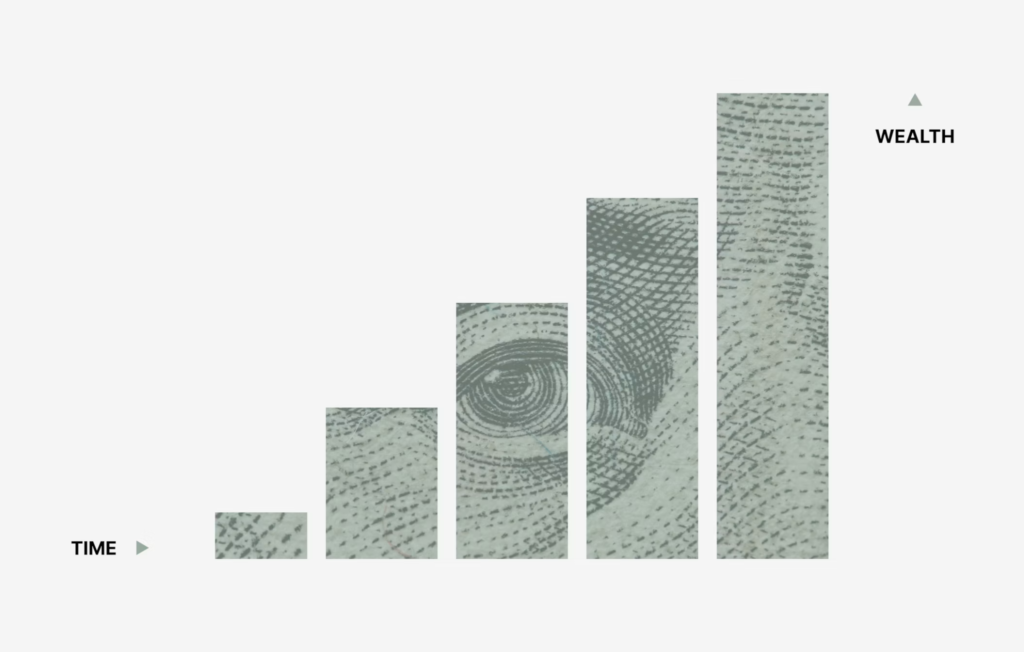
Rather than comparing to the average — which captures everyone from 18-year-old students to 34-year-olds with 10+ years of work — more useful benchmarks are savings rate and specific financial milestone goals. Fidelity suggests this savings milestone framework:
| Age target | Fidelity benchmark | What this means at median salary ($47,000) |
| By 25 | 0.5× annual salary | $23,500 saved. This is challenging for most 25-year-olds and shouldn’t cause panic if not reached. |
| By 30 | 1× annual salary | $47,000 saved. This is the more commonly cited milestone. |
| By 35 | 2× annual salary | $94,000 saved including retirement accounts. |
| By 40 | 3× annual salary | $141,000 saved including retirement accounts. |
The Fidelity benchmarks include all savings — liquid savings, retirement accounts (401k, Roth IRA), and other invested assets. They’re not purely savings account numbers.
The more practical benchmark for 22-25 year olds: Have 3-6 months of essential expenses in liquid savings (your emergency fund), plus any retirement contributions you can manage. That’s the foundation. Everything else is optimization.
What Saving Now Actually Becomes — The Math
This is the most important section for anyone who feels behind. The compound growth on money saved in your 20s is more powerful than any other financial action available to you.
| Monthly savings | At age 35 | At age 45 | At age 55 | At age 65 (retirement) |
| $100/month starting at 22 | $17,000 | $58,000 | $152,000 | $365,000 ✅ |
| $300/month starting at 22 | $50,000 | $175,000 | $457,000 | $1.1M ✅ |
| $500/month starting at 22 | $84,000 | $291,000 | $761,000 | $1.8M ✅ |
| $300/month starting at 32 | Starting | $55,000 | $191,000 | $490,000 (vs $1.1M) |
Assumes 8% average annual return (historical S&P 500 average). Past performance doesn’t guarantee future results.
The person who saves $300/month from 22 to 65 accumulates $1.1 million. The person who waits until 32 to start the same $300/month saves $490,000 — less than half. The decade of delay costs more than $600,000. This is the case for starting now, regardless of how small the amount.
$100/month at 22 — roughly $3.33/day — invested in a Roth IRA grows to $365,000 by 65, completely tax-free. The amount isn’t the barrier. The starting is.
Why Most 25-Year-Olds Fall Short of Benchmarks

The gap between benchmarks and reality is real — and it has specific causes that are worth understanding:
Student Loan Debt
According to the Federal Reserve, approximately 45% of people under 35 carry student loan debt, with a median balance of approximately $17,000. Loan payments directly reduce the money available for savings. Someone paying $300-500/month in student loan payments is working against a significant headwind.
Cost of Living Increases
Rent, in particular, has increased significantly in most US markets. Someone spending 40-50% of income on rent has far less margin for savings than benchmarks assume. High-cost city residents face a structural disadvantage that numbers alone don’t capture.
Late Start
Not everyone has stable income by 22. People who worked hourly jobs through school, took time off, or graduated into a difficult job market start accumulating savings later. A 25-year-old who only started a consistent income at 23 has 2 years of savings, not 3-7.
No Financial Education
Most young adults were never taught the basics — that high-interest debt should be eliminated first, that an emergency fund comes before investing, that a 401k match is free money. Without this foundation, money that could become savings gets spent on things that feel urgent.
Comparing yourself to the average or benchmark is only useful if it motivates action. If it triggers anxiety without a clear next step, skip the comparison and focus entirely on the catch-up plan below.
The Catch-Up Plan — Starting From Any Point
If you’re 25 and your savings are lower than you’d like, the math is straightforward. Here’s the sequence:
| # | Step | Why and how |
| 1 | Stop the bleeding | If you’re carrying high-interest credit card debt (above 15% APR), savings growth is futile — the debt interest outpaces any savings return. Pay off high-interest debt first. |
| 2 | $1,000 emergency buffer | Before saving for anything else, keep $1,000 in a separate savings account. This prevents one unexpected expense from destroying a payoff plan or going on a credit card. |
| 3 | Get the 401k match | If your employer matches any percentage, contribute enough to get the full match before anything else. A 4% match on a $40,000 salary is $1,600/year in free money. |
| 4 | Full emergency fund | Build to 3-6 months of essential expenses. In an HYSA earning 4%+ APY. This is your financial stability foundation. |
| 5 | Roth IRA | Open a Roth IRA and contribute what you can up to $7,000/year. Every dollar here grows tax-free for 40 years. |
| 6 | Automate everything | Set up automatic transfers from checking to savings/investments the day you get paid. Make saving invisible and non-optional. |
For the complete priority order with specific dollar amounts, see what to do after your emergency fund. For the Roth IRA setup in 15 minutes, see Roth IRA.
An Honest Reality Check on Savings Benchmarks

Savings benchmarks are guidelines designed for median-income, continuously-employed people with low debt. They don’t account for:
- Student loans that delayed savings by 2-4 years
- Medical expenses or family obligations that redirected income
- Living in high-cost cities where the same salary covers far less
- Career changes, layoffs, or periods without income
- Supporting family members financially
If any of these apply to you, comparing your savings to a benchmark that doesn’t account for your situation is not useful. What matters is the trend — are you saving more this year than last year? Is the number growing? Is the system in place?
A 25-year-old with $3,000 saved who has a budget, an emergency fund building plan, and automatic savings set up is in a better position than a 25-year-old with $15,000 saved and no system — because the former’s savings will grow predictably, and the latter’s may not.
FAQs
How much should a 25-year-old have saved?
According to Federal Reserve data, the median savings for adults under 35 is approximately $8,000-13,000 in liquid savings. Fidelity suggests having 0.5× your annual salary saved by 25 — about $22,500 on a $45,000 income — but this includes all assets, not just savings accounts. For most 22-25 year olds, a more practical near-term target is having a full emergency fund (3-6 months of expenses) and any retirement contributions you can manage.
Is $5,000 in savings good at 25?
Yes — $5,000 in savings at 25 is above the bottom quartile and puts you ahead of a meaningful portion of your age group. It’s below the median of $8,000-13,000, but if your $5,000 includes a funded emergency fund and you have savings being added monthly, the trajectory matters more than the current total. The gap between $5,000 and $13,000 is roughly $267/month for 3 years — achievable for most people with a clear plan.
Is $20,000 in savings good at 25?
$20,000 in savings at 25 puts you well above the median and in the upper quartile for your age group. At $20,000, assuming you started at 22 with consistent saving, you’ve demonstrated the habits that compound most over time. The next step at this level isn’t saving more cash — it’s ensuring money above your emergency fund is invested (Roth IRA, index funds) rather than sitting in a savings account earning 4-5% when the stock market historically returns 7-10%.
Why do I feel behind on savings at 25?
Most people feel behind because they’re comparing themselves to means (skewed by outliers) or benchmarks designed for people who started saving at 18 with no debt. The Federal Reserve data shows the median savings for under-35s is approximately $8,000-13,000 — not $50,000. If you have student loans, live in a high-cost city, or started your career late, the benchmark math simply doesn’t apply to your situation. Focus on the trend and the system, not the comparison number.
How do I increase my savings at 25?
The sequence that works: eliminate high-interest debt first, build a $1,000 emergency buffer, get any available employer 401k match, build a full 3-month emergency fund in a high-yield savings account, then open a Roth IRA and automate monthly contributions. The automation is the critical piece — savings that require a monthly decision to make rarely happen consistently. See financial goals for your 20s for the full decade-level plan.
The Bottom Line
The average 25-year-old has $8,000-13,000 in liquid savings (median). Most fall below their own targets not because they’re irresponsible, but because student debt, high rent, and delayed careers make accumulation harder than benchmarks assume.
If you’re behind: stop comparing and start building. The sequence works regardless of starting point — emergency fund, employer match, Roth IRA, automate. A 25-year-old who starts that system today and follows it for 10 years will be far ahead of the benchmark by 35, regardless of where they start now.
The most important number isn’t how much you have saved today — it’s how much you’re adding each month, automatically, without needing to decide each time. Get that system in place this week. start investing shows exactly where to start if you’re ready to put idle savings to work.
Sources
1. Federal Reserve — Survey of Consumer Finances
2. Bureau of Labor Statistics — Consumer Expenditure Survey